
Why Most AI Agent Teams Fail in Production, and the Operating Model That Actually Works

Table Of Content
- TL;DR
- Contents
- The failure starts when a demo becomes an operating assumption
- Most teams are automating tasks, not outcomes
- The org chart is missing, so every agent becomes everybody's problem
- Stateless execution turns small drift into system rot
- Prompt cleverness cannot compensate for missing contracts
- Tool access without rights management creates blast radius
- Evaluation theater misses the only test that matters
- KPI gravity is what separates work from activity
- Human review belongs at decision edges, not everywhere
- Chat is a terrible operating surface for multi-agent work
- The cost model is broken when nobody owns token economics
- Reliability fails when retries are accidental instead of designed
- The operating model starts with business structure, not the model picker
- A worker is an accountable unit, not a magical assistant
- State contracts are the real interface between workers
- Memory, artifacts, and audit trails keep the system honest
- Delegation is a routing problem, not a personality trait
- Governance has to be built into execution, not bolted on
- Production agent teams need economic selection pressure
- How to roll out an AI workforce without detonating existing ops
- What a working agent organization looks like after 90 days
- The teams that win will look boring from the outside
- The self-organizing swarm story breaks on contact with incentives
- Why the last mile matters more than the brainstorm
- The hidden managerial shift most founders underestimate
- A simple operating model checklist you can use this week
- Supplemental sources
- Sources
- Sources
Why Most AI Agent Teams Fail in Production, and the Operating Model That Actually Works
TL;DR
- Most AI agent failures are not model failures. They are operating model failures.
- Teams ship a clever demo, then discover they have no ownership model, no execution contracts, no audit trail, and no KPI link.
- If an agent can act but nobody can answer who authorized it, what state it read, what metric it was supposed to move, and what artifact proves the work happened, you do not have a production system. You have theater.
- Multi-agent systems collapse when every worker shares the same tools, the same vague prompt, and the same responsibility boundary, which is usually none.
- The teams that actually get value treat agents like accountable workers inside a business operating system, not magic autocomplete wrapped in Slack messages.
- The winning stack is boring in the right places: scoped rights, state contracts, workflow boundaries, audit logs, retries, escalation rules, memory discipline, and economic measurement.
- Human review matters, but only at decision edges with real blast radius. Putting a human in every loop turns the whole thing into expensive queue management.
- Cost discipline matters. A digital worker that is not tied to throughput, success rate, and unit economics becomes a novelty tax.
- Governance is not a tax on speed. Governance is how you keep speed after week two.
- The operating model that works starts with business structure, then ownership, then contracts, then routing, then metrics, then selective autonomy.
Contents
- The failure starts when a demo becomes an operating assumption
- Most teams are automating tasks, not outcomes
- The org chart is missing, so every agent becomes everybody's problem
- Stateless execution turns small drift into system rot
- Prompt cleverness cannot compensate for missing contracts
- Tool access without rights management creates blast radius
- Evaluation theater misses the only test that matters
- KPI gravity is what separates work from activity
- Human review belongs at decision edges, not everywhere
- Chat is a terrible operating surface for multi-agent work
- The cost model is broken when nobody owns token economics
- Reliability fails when retries are accidental instead of designed
- The operating model starts with business structure, not the model picker
- A worker is an accountable unit, not a magical assistant
- State contracts are the real interface between workers
- Memory, artifacts, and audit trails keep the system honest
- Delegation is a routing problem, not a personality trait
- Governance has to be built into execution, not bolted on
- Production agent teams need economic selection pressure
- How to roll out an AI workforce without detonating existing ops
- What a working agent organization looks like after 90 days
- The teams that win will look boring from the outside
The failure starts when a demo becomes an operating assumption
Most AI agent teams do not fail because the underlying model is dumb. They fail because the company mistakes a local success for an operating system.
A founder sees an agent book a meeting, summarize a call, write a decent outbound email, or fix a bug in a sandbox. Everybody gets excited. The internal story becomes obvious and dangerous at the same time: if one agent can do this, a team of agents can probably run the whole function. That jump, from isolated competence to production trust, is where most teams plant the seed of their own failure.
The demo worked under conditions that were not real. The inputs were clean. The task boundary was obvious. The fallback path was a human watching every move. The blast radius was tiny. The context window was hand-fed. The success metric was soft. Nobody asked the ugly questions that only show up after the dopamine wears off.
Who owns the result when the agent completes the task badly, but confidently?
What state did it read before acting?
What tool rights did it inherit?
What counts as success, beyond somebody saying, "that looks pretty good"?
What happens if the same worker runs again tomorrow with slightly different state and reaches a different conclusion?
How do you prove, three weeks later, why it acted the way it did?
How expensive is the workflow at production volume, not demo volume?
That is the split between AI theater and production operations.
I see this constantly in teams trying to stand up agent organizations. They obsess over prompt structure, model choice, and framework branding. They spend almost no time on business primitives. Then they wonder why the system gets flaky the moment it touches a real pipeline.
Production is where messy state shows up. Production is where partial failure matters. Production is where two workers touch the same queue, one worker retries against stale information, another publishes something that should have stayed a draft, and a third logs a perfect success report about work that never landed.
This morning alone, the signals inside our own operating environment were a perfect example of what real production looks like. One lane checked 68 unverified prospects and found 68 with no email data. Another lane was blocked because a compute server outage killed browser search. A publishing audit demoted 8 of the top 10 recent blog posts back to draft because they failed hard quality gates. Warm outbound sat at 22 messages against a 30-message target, replies were at 0 against a target of 3, and purchases were at 0 against a target of 1.
None of those are model-answer problems.
They are operating reality problems.
The agent layer sits inside a larger machine made of inputs, permissions, queues, reliability, review thresholds, metrics, and incentives. If that machine is weak, the agent does not save you. It multiplies the weakness.
This is why most teams discover the same ugly sequence. Week one looks magical. Week two gets noisy. Week three creates clean-looking logs that hide dirty execution. Week four becomes a debate about whether AI agents are overhyped, when the real issue is that the company tried to run a workforce without a workforce model.
The operating model that works is not mysterious. It is opinionated, explicit, and a little unglamorous. It says a worker should have a defined scope. It should know what state it can read, what state it can write, what success metric it is responsible for, what escalation path it uses, and what evidence it must leave behind. It should act through contracts, not vibes. It should be measured on business outcomes, not token volume or the number of tasks completed in a vacuum.
That sounds almost insultingly basic, which is exactly why smart teams skip it. They want the high-status part. They want the autonomous swarm. They want the dashboard where twenty agents appear to collaborate like a tiny synthetic company. They do not want to do the slow work of deciding who is allowed to touch the CRM, who can publish, who can spend money, who can change a record, who can only propose, and what event should trigger human review.
But that slow work is the work.
If you do it well, the model choice matters less than people think. If you do it badly, the model choice matters less than people think.
That is the real frame for this essay. I am not arguing that agent teams do not work. I am arguing almost the opposite. They work well enough that operational sloppiness becomes expensive very quickly. Once a system can really act, every missing business primitive turns into a liability with throughput.
The good news is that the fix is not mystical. You do not need a bigger prompt and you do not need another orchestration library with a slick mascot. You need an operating model built for execution windows, scoped workers, explicit routing, evidence, memory discipline, and KPI gravity. You need to treat an AI workforce like a workforce.
That is what most teams skip.
That is why they fail.
That is also why the teams that get this right will create a lead that looks unfair to everyone still arguing about which model writes prettier demo code.
Most teams are automating tasks, not outcomes
A task is a unit of activity. An outcome is a change in the business. Most agent teams fail because they confuse the two, and the confusion poisons everything downstream.
A sales agent that writes 50 outbound emails has completed tasks. A sales system that creates 3 qualified replies and 1 booked meeting has moved an outcome. A support agent that classifies tickets has completed tasks. A support system that cuts first-response time from 11 hours to 90 minutes and reduces churn in a fragile customer segment has moved an outcome. A content agent that drafts a post has completed a task. A content system that publishes a sharp article, links it into the knowledge graph, distributes it, and generates meetings from it has moved an outcome.
This sounds obvious until you look at how most teams build their agent stacks. They start from what the model can do in one inference window. Write a summary. Draft a reply. Extract fields. Make a research memo. These are useful capabilities, but they are not operating units. They are fragments.
Then the company wraps those fragments in a dashboard and calls them workers. That is where drift begins. The worker can technically do something, but nobody has defined what business state it is responsible for changing. So it optimizes for the easiest visible behavior. More drafts. More summaries. More classifications. More “done” checkmarks.
The result is a familiar anti-pattern: local productivity rises while system value stays flat.
You can watch this happen inside almost any scaling team. Marketing creates more content, but pipeline does not rise. SDRs get more AI help, but reply quality drops because the model is optimizing for message count rather than relevance. Support closes more tickets, but customer frustration rises because the classification and closure steps are faster than the actual resolution path. Engineering gets AI-generated code volume, but incident load rises because nobody tied the coding worker to defect escape rate or rollback frequency.
The deeper issue is not that the agent is “bad.” The issue is that the system never told it what success really means.
A real worker needs an outcome owner, a target metric, and a definition of done that reaches beyond the local task boundary. If you cannot say, in one sentence, what business movement a worker exists to produce, you probably do not have a worker. You have a utility function wrapped in anthropomorphic language.
That distinction matters because outcome ownership changes design choices.
If the goal is “write prospecting emails,” the agent can happily generate 100 messages from stale CRM data and call it a win. If the goal is “increase warm outbound replies in the next 72 hours,” now the system has to care about lead quality, contact data validity, personalization threshold, timing, approvals, and reply tracking. Suddenly the worker needs to know more than language. It needs to sit in an operating chain.
This is where KPI gravity becomes non-negotiable.
Inside a real business, work only matters if it moves some measure that the business actually cares about. In the Poly environment, that means asking what KPI or OKR the worker is supposed to affect. Right now there are clear signals: warm outbound messages are behind target, replies are behind target, assessment purchases are behind target, revenue is behind target. Those metrics do not care that a language model produced elegant text. They care that state changed.
The same principle applies in every function. The content worker should not be rewarded for draft count. It should be rewarded for publish quality, distribution readiness, internal link density, call-to-action clarity, and eventually traffic, sign-ups, or booked calls. The support worker should not be rewarded for ticket closure speed alone. It should be tied to resolution confidence, reopen rate, customer sentiment, and retention risk. The finance worker should not be praised for generating spreadsheet commentary. It should be tied to forecast accuracy, cash visibility, and cycle time.
Once you adopt this frame, a lot of agent design gets simpler.
You stop asking, “Can the model do this task?”
You start asking, “What operating unit owns this outcome, what state does it need, and how will we measure whether it actually helped?”
That change has practical consequences.
First, it reduces over-automation. Some tasks do not deserve their own autonomous worker. They should remain subroutines inside a broader workflow. If there is no meaningful business outcome attached, do not promote it into an “agent.” Keep it small.
Second, it improves delegation. When outcomes are clear, handoffs become legible. The research worker gathers evidence. The drafting worker converts evidence into a deliverable. The reviewer checks it against standards. The publisher changes system state. Each one has a role in the chain, but the chain itself is tied to a business goal.
Third, it exposes dead lanes. If a worker cannot be mapped to a KPI or operational outcome, it is probably performative. That does not mean it is useless forever. It means it has not earned production autonomy yet.
Fourth, it fixes incentives. Teams stop celebrating visible activity that does not compound. They start valuing workers that reduce cost, raise throughput, increase reliability, or create revenue. That is the difference between an AI demo budget and an AI labor budget.
Most companies are still stuck in the first frame. They are impressed by task completion because the models are genuinely good at language-shaped work. But language is not the business. Output is not the business. Business impact is the business.
If you want agent teams that survive production, each worker must be anchored to an outcome that survives inspection. Not “sends messages.” Sends messages that create replies. Not “writes posts.” Publishes posts that earn attention and route readers to the right action. Not “summarizes incidents.” Reduces time to resolution and makes the next incident less likely.
Tasks are building blocks. Outcomes are the reason the building exists.
Most teams stop at the bricks and then act surprised when nothing stands.
The org chart is missing, so every agent becomes everybody's problem
A surprising number of multi-agent systems are just a flat pile of prompts pretending to be an organization.
Every worker has access to roughly the same context. Every worker gets roughly the same instruction, usually some variation of “be helpful, take initiative, use tools.” Every worker can often read the same data and touch the same surfaces. Then the builders wonder why responsibilities blur, retries collide, and nobody can explain why three agents acted on the same lead while another lead got ignored for three days.
That is not a coordination failure in the abstract. That is what happens when you deploy labor without an org chart.
Human organizations learned this the expensive way a long time ago. If sales, support, finance, and marketing all share a queue, a budget, a mandate, and a manager who says “just figure it out,” politics fills the vacuum. Synthetic workers do not create politics in the same social sense, but they do create overlap, duplication, and silent abandonment. The system becomes legible only in hindsight, if at all.
An agent organization needs the same structural clarity a real company needs, but more explicit. People can infer boundaries from history, social cues, and common sense. Agents cannot. If you do not define the scope, the system will make up one from prompt language and tool availability.
That is how you get absurd behavior.
A content worker edits SEO metadata because it had access.
A support worker updates CRM notes because the prompt said “take ownership.”
A research worker creates records because nobody split retrieval from mutation rights.
A publisher pushes a post live because “finalize” sounded close enough to “prepare.”
A planning worker starts doing execution because the task description included verbs like ship and deliver.
When teams describe these failures, they usually talk about hallucination, brittleness, or agent confusion. Those labels are not wrong, but they hide the design error. The real problem is role ambiguity.
A working AI workforce needs a clear hierarchy of business structure. Company. Workspace. Portfolio. Workflow. Worker. Task. Each layer defines what the layer beneath it is allowed to optimize for. If the worker cannot anchor itself to that structure, it cannot reliably know whose goals it serves, what boundaries matter, or what tenant data it should treat as identity.
This is not theoretical inside a production environment. In our own context, the same workspace contains multiple companies, multiple products, multiple services, multiple workflows, and different active priorities. If a worker loses the portfolio anchor, it can easily pull the wrong narrative, wrong KPI set, wrong offer logic, or wrong publication target. Even a competent writer can damage the system if it writes a PowerMoves article under the Poly portfolio or routes a Poly message through the wrong brand pattern.
Good agent teams solve this by making scope part of identity, not just metadata. The worker does not merely know a portfolio ID in passing. It is instantiated inside that business boundary. Its goals, permissions, relevant KPIs, and acceptable outputs all derive from that boundary.
That creates a useful discipline: a worker should have a job, not a personality.
Job clarity beats anthropomorphic cleverness every time.
The research worker researches. The enrichment worker enriches. The drafting worker drafts. The reviewer checks against standards. The publisher mutates the blog database. The outreach worker sends only after prerequisites are satisfied. The escalation worker creates a human task only after retries and peer routing fail.
Notice what this does not require. It does not require pretending each agent is an autonomous genius. It requires building a sane org design.
A good org design has four properties.
First, each worker owns a distinct outcome or sub-outcome. Not vibes, not a persona, not a theme. A job.
Second, each worker has explicit read and write boundaries. Read more broadly if needed. Write narrowly by default.
Third, each worker has a defined handoff pattern. It knows when to stop and which downstream actor takes over.
Fourth, each worker has a measurable fitness function. Not just “did something happen,” but “did the intended business movement occur.”
Most flat multi-agent systems violate all four.
This is why adding more agents often makes the system worse before it makes it better. If the org model is weak, every new worker increases routing complexity and overlap. Teams misread this as a scaling limit of agentic systems. It is usually a management limit.
The irony is that the answer is boring enough that many technical teams resist it. They want emergent cooperation. They want spontaneous planning. They want the swarm to self-organize. There are places where that can work inside bounded problem spaces, especially in research or simulation. Business execution is not one of those places. The cost of unclear ownership in a live operating environment is too high.
If a queue is revenue-critical, an owner should be obvious.
If a record can affect customer experience, mutation rights should be narrow.
If a task requires judgment across domains, routing should be explicit.
If a function crosses multiple teams, there should be a coordinator or workflow boundary.
This is why the agent org chart matters more than the model stack. Model capability affects how well a worker performs inside its role. The org chart determines whether the role makes sense at all.
A lot of production pain disappears once teams stop asking “how many agents should we spin up?” and start asking “what jobs exist, what state do those jobs require, and where does accountability live when something changes?”
Without that structure, every agent becomes everybody's problem. With it, each agent becomes somebody's worker.
That is the difference between a demo swarm and an operating team.
Stateless execution turns small drift into system rot
The easiest way to make an agent team look good in a benchmark is to pretend every run starts fresh. The easiest way to break an agent team in production is to actually operate that way.
Real businesses are made of continuity. Customers come back. Deals move stages. Tasks remain unfinished. Bugs recur. Approvals expire. Inventories change. Priorities shift. Yesterday's partial result becomes today's starting condition. If your workers cannot reconstruct the relevant continuity, they will make locally reasonable decisions that compound into global nonsense.
That is what stateless execution does. It converts small drift into system rot.
Picture a simple blog workflow. One worker drafts. Another reviews. Another publishes. Another distributes. In a stateless design, each worker gets the current prompt and maybe the latest document body. That feels sufficient until reality hits. The reviewer does not know the original strategic angle. The publisher does not know which quality-gate failures were previously found. The distributor does not know whether the post was demoted last night for bad links. Each worker acts on a narrow slice, and the chain loses coherence.
Now scale that pattern across outbound, support, engineering, and reporting.
An SDR worker sends follow-up copy without knowing a lead already said no.
A support worker resolves an issue without seeing that the same customer reopened the ticket twice last week.
A finance worker generates a forecast note without knowing the pipeline data was marked suspect.
An incident worker posts a closure summary without knowing the root cause is still under investigation.
None of these are spectacular failures on their own. That is what makes them dangerous. They feel like normal operations noise until enough of them accumulate that people stop trusting the system.
Trust in agent teams is usually lost gradually, then all at once.
The fix is not infinite context windows. It is structured memory.
A production system needs at least three layers of continuity.
First, session state. What is true for this run, this scope, this workflow, this task? Which portfolio is active? Which IDs matter? What has already been fetched? What is the current objective?
Second, working memory or memory pad. What recent decisions, constraints, preferences, and important observations should future runs treat as current belief? This is not a giant log dump. It is a compact worldview.
Third, durable artifacts and records. What concrete output exists, where is it stored, what state change happened, and what evidence proves it?
Most agent stacks collapse these layers into a transcript. That is lazy and expensive. A transcript is not a state model. It is a noisy narrative. Production continuity requires typed memory, not just more tokens.
This matters because every worker must know not only what to do, but what not to repeat.
Inside a live operating system, retries happen, partial completions happen, race conditions happen, and upstream failures happen. If memory is weak, a worker will re-run expensive research, recreate the same document under a new name, reopen a resolved issue, or overwrite a corrected field with stale context. Teams then label the agent “unreliable,” when in reality they built a memoryless process and expected reliability to emerge.
One of the most underrated practices in agent operations is saving artifacts aggressively. If you produce content, save it. If you complete analysis, save it. If you changed state, preserve the evidence. If you discovered a blocker, persist the blocker with enough context that the next worker does not waste time rediscovering it.
Without artifacts, the system is full of invisible work.
Without compact memory, the system is full of repeated work.
Without state contracts, the system is full of conflicting work.
In our environment, that distinction is explicit. Unsaved work is invisible work. That rule exists because agent systems otherwise develop a bizarre pathology where they appear busy but leave no dependable trail. A worker says it completed the task. The downstream lane cannot find the output. Another worker starts over. Cost rises, throughput falls, confidence erodes.
There is also a governance reason to care about continuity. If a worker can take action, somebody must be able to audit why it acted. That means not just a transcript, but a reconstructable path: what state it read, what contract it followed, what tool call succeeded, what artifact it created, what mutation occurred, what quality gate passed or failed.
This is not bureaucracy. It is how you preserve speed under complexity. Once a workforce grows beyond a handful of tightly supervised automations, memory and artifacts become the difference between compounding capability and compounding confusion.
A good test is simple. If a worker vanished after this run and a new instance woke up tomorrow, could that new instance understand the current situation without rereading a thousand-line transcript? If not, the system is too dependent on accidental context.
The best agent teams design for rebirth. Every execution is a fresh wake-up. Continuity is reconstructed from state, memory, artifacts, and recent history. That discipline makes the system more resilient because it assumes amnesia and plans around it.
The alternative is magical thinking. You hope the model “remembers enough” from the conversation, or that the orchestration layer will somehow preserve coherence across retries, branches, and partial failures. It will not. Not reliably, not at scale, not under business pressure.
Stateless execution can be fine for disposable tasks. Ask a model to rewrite a sentence, classify a support email, or draft three subject lines, and you may not need durable continuity. But the moment you claim to have an agent team, not just model-assisted utilities, you have entered a continuity business.
That means memory design is operating design.
Teams that understand this build systems that can survive drift.
Teams that ignore it discover a harsher law: small memory mistakes do not stay small once they are repeated by software at worker speed.
Prompt cleverness cannot compensate for missing contracts
When an agent team starts failing, the first reflex is usually prompt surgery.
Maybe the system prompt needs more detail.
Maybe the worker needs stronger reminders.
Maybe the output format should be more rigid.
Maybe the chain-of-thought should be longer.
Maybe the model needs a persona upgrade, or a harsher instruction, or more examples.
Sometimes that helps around the edges. Most of the time it is compensation behavior for a deeper design gap. You are trying to solve structural ambiguity with better prose.
A contract does something a prompt never can. It defines the relationship between a worker and the system around it.
What state can this worker read?
What state can it write?
What are the preconditions for acting?
What fields must exist before mutation?
What does it emit for downstream workers?
What evidence must it save?
What are the allowed failure modes and retries?
When must it stop and escalate?
Without answers to those questions, the prompt becomes a wish list. You can make it elegant, exhaustive, and beautifully phrased, and the worker will still have to infer operational rules from language. That is not governance. That is improv.
The strongest production systems I have seen use prompts for judgment and tone, but contracts for structure. The prompt tells the worker how to think inside its lane. The contract tells the worker what the lane is.
This distinction explains why many demo systems degrade so sharply in live use. In the demo, the human operator silently provides the contract. They curate the inputs, choose the moment, supply the intent, notice when the agent is veering off, and clean up the outputs. The prompt appears powerful because the human is invisibly doing the boundary work.
Then the team tries to scale. The human steps back. Suddenly the agent has to infer preconditions it was never taught to verify. It drafts before the research exists. It publishes before QA. It updates fields that were meant to be read-only. It escalates things it should have retried and retries things it should have escalated.
At that point the team often says the model is inconsistent. Sometimes it is. More often the model is being asked to function as a policy engine, a workflow runtime, and a permissions system all at once.
That is a design mistake.
Consider publishing. A good publishing contract might say: title required, description 50 to 300 characters, content minimum length, valid image URL required for published status, unique slug required, target database resolved from portfolio scope. That is a contract. It is testable. It is enforceable. It is far more valuable than a prompt that says “only publish high-quality posts.”
Or take outbound. A useful contract might require verified email, lead stage in a specific range, no recent opt-out flag, approved offer context, and one active CTA. Again, that is enforceable. It narrows the problem. It lowers blast radius.
Or take support resolution. The contract might require issue type, root-cause confidence score above a threshold, no open dependency blockers, and a customer message draft saved before the ticket can close.
Once you define systems like this, the worker stops pretending to be omniscient. It becomes responsible inside a frame.
That frame also improves debugging. If a worker violates a contract, you know what failed. If there is no contract, every failure becomes an interpretive argument about intent, prompt wording, or model quality. You end up in meetings where smart people debate whether “take initiative” was too permissive.
Contracts remove a lot of emotional nonsense from agent operations.
They also make delegation tractable. A downstream worker should not need to parse a giant transcript to understand what happened upstream. It should receive a predictable payload. The research worker emits findings plus confidence notes. The drafting worker emits a draft plus metadata. The reviewer emits a pass, fail, or revision note against clear criteria. The publisher mutates only when the prior contract has been satisfied.
This is how software engineering solved complexity decades ago. Interfaces. Validation. Type expectations. Clear mutation boundaries. The weird thing in agent systems is that many teams rediscover the need for these ideas, then refuse to name them because they want the system to feel more fluid than it really is.
Fluidity is fine at the edges. Contracts belong at the core.
There is another reason prompt-centric teams struggle. Prompts are cheap to change, which means they invite undisciplined iteration. Every incident leads to another line in the system prompt. Every edge case adds more warnings. Every failure becomes another paragraph of “never do X unless Y except when Z.” After a while the prompt turns into a legal document no worker reliably follows, and the team mistakes prompt length for rigor.
A contract-driven system ages better. Instead of stuffing every lesson into natural language, you codify key boundaries where they belong. Preconditions stay explicit. Allowed mutations stay narrow. Required outputs stay structured. The prompt remains focused on reasoning, style, and tradeoffs.
That separation matters more as the workforce grows. One worker with one prompt can survive sloppiness for a while. Ten workers with overlapping prompts cannot. You need a shared operating grammar.
A contract is that grammar.
If you are running a production agent team today, one of the highest-leverage questions you can ask is this: for each worker, what does the system enforce independently of the prompt?
If the answer is “not much,” then your agent team is being held together by good intentions and token spend.
That can look impressive in week one.
It does not survive week twelve.
Tool access without rights management creates blast radius
One of the most reckless assumptions in agent design is that capability should be broad because reasoning is expensive.
The argument goes like this. If the model is smart enough to understand the business objective, why not give it all the tools it might need so it can act flexibly? Why create friction? Why slow down the autonomous system?
Because rights are not friction. Rights are how you stop a fast system from becoming a fast mistake.
A production workforce should be designed around least privilege. That principle matters more, not less, when the worker is synthetic. A human employee comes with context from training, social norms, and career risk. An agent comes with instructions and access. If the access is too broad, the instructions are doing security work they were never meant to do.
This is where many agent teams quietly step into danger. They wire together tools for convenience, not for governance. The same worker can search, edit, publish, spend, message, and update records. The only thing separating safe behavior from unsafe behavior is a prompt sentence like “be careful.”
That is not safety. That is hope.
Rights management should answer a simple question for each worker: what is the maximum damage this unit can do if it is wrong, stale, or overconfident?
If the answer is “publish customer-facing content, mutate source-of-truth records, and trigger outbound actions,” the worker needs narrow rights and strong preconditions.
If the answer is “read context and propose a plan,” the worker can have broad read access and near-zero write rights.
This is why I prefer splitting research from mutation, and planning from execution, whenever the blast radius is meaningful. A research worker can inspect many systems. An execution worker should write to very few. A reviewer can approve or fail. A publisher can publish, but only after the approval signal exists. The outbound sender can send, but only if enrichment and opt-out checks pass.
That may sound obvious, yet I still see systems where a single generalized agent can do everything from drafting copy to changing CRM stages to pushing live site updates. Teams describe that as flexibility. I describe it as a very expensive trust fall.
Broad rights also create subtler damage even when no catastrophic error occurs.
Workers become lazy about handoffs because they can do the next step themselves.
Review stages collapse because the same worker can self-approve.
Audit clarity disappears because actions blur together.
Downstream specialization never forms because every lane is a mushy generalist.
When something goes wrong, incident review becomes impossible because no one can tell whether the failure came from reasoning, access scope, stale context, or a missing approval.
Rights management is not just about prevention. It shapes system quality.
A narrow worker tends to produce cleaner outputs because its role is legible. It knows what “done” looks like. It knows where to stop. That makes the whole chain easier to debug, easier to measure, and easier to improve.
There is also an economic angle people miss. Over-privileged workers are expensive. Not only because they can cause bigger mistakes, but because they require heavier prompt constraints, more defensive checks, and more human oversight. Teams then conclude that autonomous systems need constant human babysitting. Often what they really built was a permission model so loose that babysitting became the only remaining control.
A better pattern is tiered autonomy.
Tier one: read-only workers. These can research, analyze, summarize, classify, and recommend.
Tier two: bounded mutators. These can update limited record types under strong validation.
Tier three: high-impact executors. These can publish, spend, message customers, or change critical records, but only through stricter contracts and often with explicit approval edges.
Tier four: coordinators. These do not need broad write power. They route, plan, and decide which specialized worker should act.
This structure mirrors healthy human organizations. Junior staff may gather information and prepare work. Specialists execute inside domain boundaries. Managers coordinate. Executives approve major resource moves. The synthetic version should be at least that disciplined.
If anything, it should be more disciplined, because software acts at scale and at odd hours.
One more point that matters in production: rights should map to tenant boundaries. In a multi-company or multi-workspace environment, scope is not just a convenience filter. It is part of security. The worker should not be able to casually drift across companies because a prompt mentioned another brand in the transcript. Tenant isolation is not a nice-to-have. It is identity.
A lot of teams learn this only after an embarrassing near miss. An agent drafts the right content under the wrong brand. A report pulls the right numbers from the wrong workspace. A follow-up references a customer relationship from a different entity. The model may have reasoned plausibly. The system still failed.
Rights should make those errors hard to perform.
If your current agent stack assumes the worker can be trusted because the prompt is smart, flip the logic. Assume the worker will occasionally be wrong, stale, overeager, or mis-scoped. Then design the rights model so the damage is contained.
That is what real operators do. They do not build for perfect reasoning. They build for bounded failure.
A team that can survive bounded failure gets better over time.
A team that relies on universal access eventually discovers its blast radius in production.
Evaluation theater misses the only test that matters
One of the most misleading habits in the agent world is evaluating systems like lab specimens after you have already promised the business a workforce.
Teams obsess over benchmark scores, prompt-level pass rates, synthetic tasks, pairwise output comparisons, and demo-day acceptance tests. Those can all be useful diagnostics. None of them answers the question that matters in production: did the system create reliable business movement under real operating conditions?
A worker that scores 92 percent on a canned eval but fails silently when upstream data is missing is not a production worker. A content agent that produces strong prose in review but misses the booking CTA, ships bad links, or cannot handle the publishing contract is not a production worker. A prospecting agent that writes persuasive copy but cannot cope with the fact that 68 records have no verified email is not a revenue worker. It is a copy machine connected to a broken lane.
Production evaluation has to include ugly conditions.
Dirty inputs.
Partial outages.
Stale state.
Conflicting instructions.
Missing fields.
Duplicate tasks.
Permission limits.
Time pressure.
Downstream rejection.
Economic constraints.
Most teams do not like this kind of evaluation because it exposes a painful truth: the bottleneck is rarely the model alone. The bottleneck is the operating chain. So they keep testing the one part that is easy to isolate and flattering to improve.
That is evaluation theater.
The right question is not “can the model produce a good answer?”
The right question is “can this worker repeatedly change the intended business state, inside its contract, at acceptable cost, with acceptable risk, under ordinary production mess?”
That is a much harsher test.
It also gives you much better design feedback.
For instance, when a content lane fails, the useful signal is not just whether the article sounded smart. The useful signal includes whether it met the structural quality gate, whether the images were valid, whether the internal links existed, whether the article passed publish checks, whether it survived later QA, and whether it contributed to business goals after release.
When an outbound lane fails, the useful signal is not just whether the email looked personalized. It is whether the contact data existed, whether compliance checks passed, whether the send happened, whether the reply rate changed, and whether downstream conversion improved.
When an engineering lane fails, the useful signal is not whether the patch compiled in isolation. It is whether the change merged cleanly, whether CI passed, whether rollout succeeded, whether incident volume changed, and whether future cycles got easier.
This is why I am skeptical when teams say their agent platform is working because users “love it.” Love can be real and still be irrelevant. Users also loved early chatbots that never touched system state. If your goal is content ideation, maybe delight is enough. If your goal is production execution, love without measurable business motion is a vanity metric.
A better evaluation stack has at least five layers.
First, task quality. Did the worker produce an output that meets a human standard?
Second, contract compliance. Did it act only within its rights and preconditions?
Third, system reliability. Did it handle real-world mess, retries, and partial failure?
Fourth, economic efficiency. Did it do the job at acceptable cost per successful outcome?
Fifth, business impact. Did the metric this worker exists to move actually move?
Most teams overweight layer one because it is the easiest to demo. The production truth usually sits in layers three through five.
This is also why agent teams need post-action verification, not just pre-action confidence. A worker may believe it completed the task. The system should still verify whether the record changed, whether the artifact exists, whether the post is published, whether the message was sent, whether the queue advanced, whether the downstream tool returned success.
Ground truth beats self-report.
If you skip verification, you create a fantasy league of autonomous workers where everybody claims victories and no one notices that half the work did not land.
Another common failure is evaluating each worker independently while ignoring chain effects. The research worker may be fine. The drafting worker may be fine. The reviewer may be fine. The publisher may be fine. But the lane fails because the interfaces between them are weak. That is why workflow-level evaluation matters. Businesses do not buy isolated worker quality. They buy end-to-end results.
A final point: evaluation should not be a one-time gate. It should be part of selection pressure. Workers that repeatedly miss their targets, waste spend, create rework, or trigger unnecessary escalations should lose autonomy or get redesigned. Workers that move KPIs at low cost should earn more traffic. This is how real operations improve.
If you do not have a mechanism like that, your system will retain low-fitness workers for sentimental reasons. Teams get attached to clever demos and tolerate underperformance because the agent feels sophisticated.
Production does not care how sophisticated it feels.
It cares whether the lane holds.
The only test that really matters is what happens when the worker meets a live queue, imperfect data, and a business that expects the output to count. Everything else is rehearsal.
Useful rehearsal matters. But you should never confuse rehearsal with opening night.
KPI gravity is what separates work from activity
The most dangerous phrase in agent operations is “the system is busy.”
Busy doing what?
Against which metric?
At what cost?
With what evidence?
A production workforce without KPI gravity drifts toward activity because activity is easy to observe. There are messages, summaries, reports, drafts, tickets, notes, classifications, and dashboards. It all feels alive. Then the business asks the only honest question: did any of this make us money, save us money, or make customers happier?
If the answer is unclear, the system has slipped into ornamental intelligence.
KPI gravity means every meaningful worker is pulled toward a measurable business result. It does not mean every single inference has a neat revenue tag. It means the chain of work can be traced to an actual operational objective, and that the worker is evaluated partly by whether it helps move that objective.
Without that gravity, teams optimize for vanity metrics.
The writing worker maximizes word count.
The outreach worker maximizes send volume.
The support worker maximizes ticket closure count.
The analytics worker maximizes dashboard production.
The planning worker maximizes plan sophistication.
All of these can rise while the business remains flat or gets worse.
The current KPI board in the Poly environment is a clean reminder of how unforgiving reality is. Warm outbound messages are at 22 against a target of 30. Replies are at 0 against a target of 3. Warm outbound assessment purchases are at 0 against a target of 1. Tier 1 weekly revenue is at 0 against a target of 940 dollars. Those numbers impose discipline. They tell you immediately what kind of work matters and what kind of work is merely adjacent.
A content worker producing a beautiful essay may still matter, but only if it is part of a pipeline that plausibly improves demand capture, authority, internal linking, booking conversion, or sales conversations. If it is just publishing into the void, the KPI board will eventually expose that.
This is why I like explicit strategy cascades. Strategy drives OKRs. OKRs define measurable outcomes. KPIs track movement. Workers should be able to point upward through that chain. If they cannot, you have an accountability leak.
KPI gravity changes worker behavior in useful ways.
First, it prioritizes the right work. When a worker sees multiple valid tasks, the KPI context helps it choose the one with the highest expected business movement.
Second, it disciplines tradeoffs. A worker may be able to produce a higher-fidelity output with double the token cost. KPI gravity forces the question: is the expected gain worth the spend?
Third, it improves escalation. A blocker against a critical KPI lane deserves faster routing than a blocker in a low-impact lane.
Fourth, it reduces speculative work. Agents stop producing polished deliverables that nobody needs right now.
Fifth, it gives you a fitness function. Workers that move their metrics stay. Workers that do not should be redesigned, narrowed, or retired.
A lot of teams nod along with this and then quietly avoid the hard part, which is actually tying agent performance back to outcomes. They say attribution is messy. It is. They say many workers contribute indirectly. True. They say causality in business systems is probabilistic. Also true.
None of that is an excuse to operate without measurement.
Humans work in messy attribution environments too. Good operators still build directional evidence. They compare before and after. They look at throughput, cycle time, error rate, cost per successful action, queue aging, response time, conversion rates, incident recurrence, publish pass rates, and revenue-adjacent movement.
Agent systems should be held to at least that standard.
This is also where the economics of AI labor become much clearer. A worker is not cheap because its per-inference price is low. A worker is cheap if it produces the intended business movement at a lower fully loaded cost than the alternative, with acceptable risk. That is a unit economics question, not a vibes question.
One of the better recent pieces in this blog estate, The Unit Economics of AI Labor, makes this point directly. The argument is not that digital workers are magical. It is that they can become attractive labor units when cost, scope, and outcomes are aligned. Similarly, Poly Is a Business Operating System (Not Another Tool) matters here because it frames the system as an execution substrate tied to strategy, not a bag of disconnected assistants.
Those are not just internal links for SEO. They illustrate a deeper point: an agent workforce only becomes believable when it is integrated into the business logic that measures whether work mattered.
There is also a psychological effect. KPI gravity reduces storytelling. Teams cannot hide behind polished demos for long if the dashboard shows flat results. That pressure is healthy. It forces design honesty.
Did the worker actually help?
Did the lane speed up?
Did errors go down?
Did revenue move?
Did customer pain decrease?
If not, why are we funding this lane?
A workforce with KPI gravity can answer those questions, even imperfectly. A workforce without it becomes a cost center dressed up as innovation.
This is why I say KPIs are not reporting furniture. They are gravity wells. They keep workers from floating off into activity for activity's sake.
The companies that win with agent teams will not be the ones with the most elaborate orchestration diagrams. They will be the ones whose workers are tightly coupled to the numbers the business already bleeds for.
That is what makes the system accountable.
That is what makes it real.
Human review belongs at decision edges, not everywhere
A lot of companies discover the risks of autonomous systems and respond by putting a human in every loop. That feels prudent for about three days. Then the queue backs up, workers idle, humans become bottlenecks, and the whole system turns into expensive administrative choreography.
The common defense is that human review makes the system safe. Sometimes it does. More often it just makes the system slow while preserving the same structural problems underneath.
The better frame is this: human review should sit at decision edges with meaningful blast radius, not at every action edge by default.
If an agent is summarizing notes for internal use, mandatory human review is probably waste.
If an agent is drafting a blog section under a known voice and another worker will review the full draft before publication, mandatory human review on every paragraph is waste.
If an agent is classifying support tickets with a tight confidence threshold and a clean fallback lane, mandatory human review on every ticket is waste.
But if an agent is publishing public content, sending customer-facing outbound messages, spending money, approving a refund, changing access privileges, or writing to a compliance-relevant source of truth, now review may matter a lot.
The key is to define where judgment is expensive if wrong.
That is where human review earns its keep.
Everywhere else, it often hides deeper design failure. Teams use human review to compensate for weak contracts, loose rights, poor evaluation, and vague ownership. Instead of fixing the system, they insert a person to absorb ambiguity.
That works at very small scale. At larger scale it creates a sad hybrid where humans do all the responsibility work and agents do the cosmetically impressive parts.
The result is not an autonomous workforce. It is a queue generator.
This is one reason people get disappointed after the first wave of agent pilots. They expected labor leverage. What they got was a new class of drafts that humans must babysit. The technology is not always the problem. The review architecture is.
A strong review design has a few characteristics.
First, review is tied to risk, not habit. You define categories of action that require approval because the blast radius is real.
Second, review is late enough in the chain that it evaluates something substantive. Humans should not review every micro-step if they really care about the final decision boundary.
Third, review is information-rich. The approver sees the recommendation, the evidence, the relevant state, the expected KPI impact, and the alternatives considered. Otherwise you are just forcing a human to reconstruct context that the system should have assembled.
Fourth, review has a clean fallback. Approval, rejection, or revision request should trigger legible next steps.
Fifth, review volume is measured. If the same lane generates endless approvals with almost no rejections, you are probably over-reviewing. If approvals are frequently catching obvious issues, your upstream design is too weak.
The goal is not to eliminate humans. The goal is to use human judgment where human judgment actually compounds system quality.
The same principle applies to escalation. In the Poly operating model, human-in-the-loop escalation is explicitly a last resort. The ladder is solve it yourself, route to a peer, only then escalate. That rule exists because premature escalation is a tax on the whole organization. It externalizes work the worker should have handled or routed more intelligently.
Many agent teams have the opposite pattern. The minute anything gets messy, the agent asks a person. That creates the illusion of safety while destroying throughput. Worse, it teaches the system not to develop resilience.
A better system reserves human judgment for what humans are best at: policy interpretation under ambiguity, high-stakes approvals, exception handling when the cost of error is meaningful, and periodic redesign when the workflow itself needs to improve.
Everything else should be engineered so the worker can proceed safely without waiting.
There is also a morale angle that matters. Human reviewers quickly become cynical if their role is to rubber-stamp near-identical agent outputs. They stop paying attention, which means your safety theater becomes fake safety. If you want humans to review well, give them fewer, sharper decisions where their intervention changes outcomes.
Review architecture also affects economics. If you need a human to touch every agent output, your labor savings may evaporate. A system that requires a 90-second review on 1,000 daily outputs is not cheap. It may still be worth it in some domains, but you should calculate that honestly. Many teams do not.
The mature posture is selective autonomy. Let the worker run where the contract is strong and the blast radius is low to moderate. Insert review where stakes jump. Verify after the fact where possible. Audit patterns over time. Tighten or relax the thresholds based on evidence.
That is how you keep both speed and control.
The companies that win will not be those that shout “fully autonomous” the loudest, or those that route everything through a human inbox. They will be the ones that place human attention at the right edges and make the rest of the system dependable enough to move without constant permission.
That sounds less glamorous than the demos.
It also works.
Chat is a terrible operating surface for multi-agent work
Chat is a great interface for exploration. It is a mediocre interface for execution. It is a terrible operating surface for a multi-agent workforce.
I understand why teams start there. Chat is familiar. It makes the system feel alive. It lowers the barrier to asking for help. It allows free-form instructions. For one-off collaboration, that is useful.
The problem starts when teams mistake the conversational surface for the operating model. Then everything important gets buried inside prose.
State is implied instead of typed.
Approvals are casual instead of explicit.
Responsibilities blur because anyone in the conversation can seemingly do anything.
Important decisions disappear into scrollback.
Retries happen manually.
Downstream workers must parse narrative instead of consuming structured outputs.
It feels intuitive to humans because humans are good at reconstructing intent from messy dialogue. Systems are not.
Even when the underlying agents are capable, chat as the primary operating layer creates fragility. A single ambiguous message can change scope. A buried correction can be missed. A tool result can scroll out of practical visibility. A critical failure can be acknowledged conversationally without being persisted as a blocker or artifact. You end up with a workplace where important actions are happening in a medium optimized for ambiguity.
That is fine if the stakes are low.
It is not fine if you are trying to run revenue, support, engineering, or publishing through it.
A real operating surface needs typed state, visible workflow stages, explicit task ownership, machine-readable artifacts, event history, and clear mutation trails. In other words, the place where agents execute should look more like an operating system than a group chat.
This is one of the deeper reasons I think the “agent in Slack” pattern is overused. Slack can be a notification surface. It can be an escalation surface. It can be a request intake surface. It should not be the source of truth for a serious multi-agent organization.
The same goes for pure chat-based copilots in business software. They feel magical because you can type anything. But that flexibility hides a structural weakness. If every operation begins with free-form text and ends with more free-form text, then the actual system state lives somewhere offstage, and the burden of coherence remains with the human.
That defeats a big part of the point.
The operating model that works treats chat as an outer shell, not the inner mechanism. The inner mechanism is workflows, tasks, rights, contracts, artifacts, and metrics. The agent may converse at the edge, but it should execute inside defined rails.
This matters more as the number of workers grows. One assistant in chat can be manageable. Ten workers in shared conversational space becomes chaos unless a stronger execution substrate is underneath. Who owns the task? Which worker is active? What is blocked? What was already tried? Which artifact is canonical? Has the state already changed? Those questions deserve first-class representation, not conversational inference.
There is another practical issue. Chat encourages over-prompting and under-instrumentation. Instead of building the right data structures, teams try to tell the model more. Instead of creating a proper task object, they add another sentence. Instead of storing the decision, they repeat it in the thread. This feels fast at first, then turns into operational sludge.
A better pattern is simple. Use chat to initiate, clarify, or monitor. Use workflows and tools to do the work. Use artifacts to persist outputs. Use state to drive continuity. Use dashboards to inspect queues and KPIs. Use explicit mutation tools to change records. That gives you both usability and rigor.
It also reduces one of the most common hidden costs in agent teams: human context reconstruction. When chat is the operating layer, every person and every worker keeps re-deriving the situation from narrative. That cost is hard to see in a demo and obvious in a scaling organization.
You can feel it when meetings become transcript archaeology.
You can feel it when a new worker spends half its budget re-reading conversation.
You can feel it when a human asks, “Wait, did we already publish that?” and nobody can answer without digging.
A proper operating surface makes those questions cheap to answer.
This is not an argument against natural language. Natural language remains one of the best coordination media we have. It is an argument against using natural language alone as the substrate for execution.
Businesses already learned this lesson with humans. We do not run payroll from hallway conversations. We do not manage incidents from verbal memory. We do not treat casual chat as the contract for expense approval. We have systems of record.
Agent teams need the same respect for operational surfaces.
If your current multi-agent stack works mainly by having workers talk in a thread, you do not yet have a real operating model. You have a theatrical surface with some useful automation attached.
That may still be enough for exploration.
It is not enough for production.
The cost model is broken when nobody owns token economics
Most teams talk about agent capability like they are buying brilliance by the pound. Bigger context window, higher model tier, more tools, more autonomy. Then six weeks later finance asks a rude but useful question: what exactly are we getting for this spend?
This is where a lot of agent programs go soft. Nobody owns the cost model end to end.
Engineering may own infrastructure.
Product may own adoption.
Ops may own workflow design.
No one owns unit economics.
That gap is survivable while volumes are low and enthusiasm is high. It becomes a real problem when agent usage spreads across functions. At that point every design decision has an economic signature: model choice, context size, retry policy, evaluation overhead, human review rate, failure recovery, tool call count, artifact storage, and queue idle time.
If nobody is responsible for converting those into cost per successful outcome, the workforce becomes a novelty tax.
This is one reason I prefer to talk about digital workers instead of “AI features.” Labor language forces harder questions. What is this worker's throughput? What is its success rate? What does it cost per hour-equivalent or per completed unit? What error rate can the business tolerate? When does a more expensive model actually pay for itself? When should a worker be retired because its marginal value is weak?
Those questions are much healthier than generic obsession with model quality.
The trap many teams fall into is optimizing for local output quality while ignoring whole-lane economics. Yes, the premium model writes slightly cleaner copy. Yes, the giant context reduces one class of failure. Yes, the extra review pass catches more issues. But if the lane requires three expensive calls, one cheap call would have sufficed, and a human still has to spend two minutes correcting it, the business case may be underwater.
The opposite error also happens. Teams use the cheapest possible model everywhere, then wonder why the workforce generates rework. Cheap reasoning upstream can be expensive if it creates bad mutations or forces constant retries downstream.
The right approach is not “always use the best model” or “always use the cheapest model.” It is economic matching.
Use the minimum capability required to hit the business standard at acceptable risk.
That sounds simple. It is not. But it is measurable.
For each worker, track at least four things.
First, average cost per run.
Second, success rate under production conditions.
Third, cost per successful outcome, not just per run.
Fourth, downstream correction cost, including human review when relevant.
Now you have a real labor picture.
This matters because autonomy amplifies spend in both directions. A high-fitness worker can generate fantastic leverage. A low-fitness worker can burn money at machine speed while producing the illusion of productivity.
I have seen both patterns. In one case, a narrow worker handling a repetitive data normalization task can create extraordinary value because the inputs are structured, the contract is tight, and the throughput is high. In another case, a broad “strategy agent” burns large-context calls generating polished but low-consequence analysis that nobody acts on. One is labor leverage. The other is ambient expense.
Token economics also shape architecture. If every worker has to ingest the whole world every time it wakes up, your memory design is broken and your cost model will tell on you eventually. If workers can rely on compact state, artifacts, and narrow contracts, you can keep context budgets much tighter. Good operating design usually lowers cost because it reduces needless reasoning.
This is another place where the operating model matters more than people admit. Clean delegation lowers spend. Strong rights management lowers review overhead. Good contracts reduce retries. Typed memory lowers context costs. KPI gravity prevents low-value work. The entire system becomes cheaper because it stops doing confused work.
A company should also think about opportunity cost. If a worker consumes premium inference budget but does not move revenue, retention, or cost savings, that budget is crowding out better uses. Inside a real business, this matters. The AI budget competes with headcount, tools, ads, software, and founder attention.
This is why I like economic selection pressure. Workers should earn traffic. Not every clever prototype deserves production volume. Start narrow. Measure. Increase load when the worker proves it can hold the lane. Reduce or retire workers that consume budget without moving outcomes.
People sometimes hear this and worry it will suppress innovation. I think the opposite. Economic clarity helps innovation survive because it separates promising experiments from expensive decoration. Teams can try more things when they are honest about which ones are earning their keep.
The recent piece on The Unit Economics of AI Labor pushes in exactly this direction. A worker has to justify itself as a business unit, not just a technical curiosity. That is the right frame for agent teams too.
If your current program does not know which workers are high-yield and which are burning money politely, you do not have a mature operating model yet.
You have usage.
Usage is not the goal.
Economic performance is.
Reliability fails when retries are accidental instead of designed
A surprising amount of so-called autonomous execution is just a sequence of lucky first tries.
That is fine in a demo. It is fatal in production.
Every live system experiences partial failure. APIs time out. Queues back up. records are missing fields. Search providers go down. A dependency returns malformed data. A write succeeds but the confirmation read lags. A publish action fails because the slug already exists. A browser lane cannot complete because compute infrastructure is unreachable. These are not edge cases. They are weather.
The current operating environment is full of exactly this kind of weather. Browser search has been blocked by compute server issues. Enrichment lanes recovered profile and company paths but found zero verified emails. Publishing QA demoted 8 of the 10 most recent posts because they failed hard gates. None of that means the workforce should stop. It means the workforce needs designed resilience.
Too many teams treat retries as a last-second patch. Something fails, so they tell the agent “if that does not work, try again.” That is not a retry strategy. That is superstition with loop syntax.
A proper retry model starts with failure categories.
Transient failures should often be retried automatically. Provider unavailable, timeout, rate limit, temporary network error, or stale read after write. Those can justify bounded retries with backoff.
Deterministic failures should not usually be retried unchanged. Missing required fields, invalid state, duplicate slug, absent image URL, no verified email, or contract violation. Retrying the same input is just burning money.
Judgment failures need a different treatment. The worker may need better context, a narrower task, an alternative tool, or a peer handoff.
Governance failures should stop the action. If the worker lacks rights, or the action crosses a policy boundary, it should route rather than improvise.
Once you separate those categories, the system gets much saner.
A publish worker that gets a duplicate slug should generate a new slug and retry. A publish worker that is missing a valid public image for a post intended to go live should not keep trying to publish. It should fix the dependency or stay in draft. An outreach worker blocked by missing email data should not keep writing gorgeous messages for contacts it cannot reach. It should route that constraint to enrichment or pause the lane.
This seems straightforward, but many teams skip it because their orchestration layer is optimized for happy-path execution. If the tool call returns success, proceed. If not, surface an error. That is not enough. Production systems need explicit post-failure behavior.
One of the best signs of maturity in an agent team is that workers do not panic at tool failure. They change tactics.
Retry with different parameters.
Use an alternative tool.
Reduce scope.
Persist the blocker.
Hand off to a better-suited worker.
Escalate only after the other options are exhausted.
That is not just a resilience pattern. It is an economic pattern. Thoughtless retries are expensive. So is brittle abandonment. Designed resilience tries the cheapest plausible recovery path that preserves the business objective.
There is another hidden reason retries fail in weak systems: they are stateless. The worker sees an error and retries without understanding what was already attempted. That causes duplicate work, looping, and contradictory outputs. A proper retry path should inherit the failure context. What failed? Why? Which parameters were used? Was there any partial success? What should not be repeated?
Without that, retry logic becomes a cost amplifier.
Reliability also depends on idempotence. If a worker might run twice, the second run should not corrupt the system. This is one reason mutation tools need strong contracts and post-action verification. If the first write succeeded but the acknowledgment failed, a blind retry can create duplicates or inconsistent state. Many agent stacks treat this like a software engineering footnote. It is not. It is core to trustworthy automation.
A lot of the most painful operational issues in agent teams are not model hallucinations. They are double-sends, duplicate records, repeated escalations, partial publishes, and failed handoffs after unclear retries. Those are workflow reliability problems. They are solvable, but only if you design for them deliberately.
I also think teams underestimate the morale effect of unreliable retries. Humans stop trusting the system when it appears erratic around failure. The worker might be brilliant 90 percent of the time, but if the remaining 10 percent generates weird loops, missing outputs, or noisy escalations, people begin to keep it at arm's length. Adoption falls. Oversight rises. The system becomes decorative.
Designed retries protect trust because they make failure legible.
“We retried twice with backoff and the provider remained unavailable.”
“This was not retried because the contract was not satisfied.”
“The worker switched to a different tool and completed the task.”
“The lane is blocked on missing verified email data, so downstream outreach remains paused.”
Those are operationally intelligible outcomes.
This is also why every worker should have a stopping rule. Endless persistence is not resilience. It is pathological optimism. At some point the worker should say: this cannot be solved cheaply inside my lane. Route it.
The operating model that works treats failure as ordinary, not exceptional. That shifts the design posture. You stop asking how to eliminate all errors, which you cannot. You start asking how the system should behave when ordinary failure arrives.
That is what separates a sturdy workforce from a fragile demo.
The reliable system is not the one that never fails.
It is the one that fails in bounded, recoverable, well-explained ways.
The operating model starts with business structure, not the model picker
When teams decide to “do agents,” the kickoff conversation usually starts in the wrong place.
Which model should we use?
Should we go all-in on a single vendor?
How many agents can we spin up?
Which framework gives us memory, tools, and orchestration?
Those questions matter, but they are downstream questions. The operating model starts somewhere less glamorous: what business structure are we actually trying to automate?
A company is not a prompt. It is a set of entities, scopes, goals, constraints, and processes. If you ignore that structure, you will build a clever layer that floats above the business without really gripping it.
I prefer to start from a chain like this: company, workspace, portfolio, workflow, worker. The company sets the broader mission and economics. The workspace groups operational context. The portfolio defines the product, service, or business line. The workflow defines the bounded objective. The worker executes a specific role inside that objective.
That structure sounds administrative until you watch what happens without it.
The wrong brand voice gets used.
The wrong data source is queried.
The wrong target database gets selected.
The wrong KPI set is optimized.
A revenue lane gets confused with a content lane.
A worker improves a local metric that does not matter to the portfolio it is supposed to serve.
Multi-tenant environments make this even more serious. Scope confusion is not just messy. It can be a security and trust problem. A worker should know which business it belongs to for that run, not infer it from scraps of surrounding text.
This is another reason I resist the fantasy that a single general super-agent will run the whole company. Even if model capability keeps improving, businesses still need structure. Product lines differ. Brand rules differ. approval paths differ. databases differ. KPIs differ. The system has to reflect that reality.
Once you start from business structure, better worker design follows naturally.
A blog writer for the Poly portfolio has a different job than a grant application drafter for a funding lane.
An outbound worker for assessment sales should care about different KPIs than a publisher for thought leadership content.
A reviewer for a regulated workflow should hold a different risk posture than a reviewer for internal documentation.
These are not just prompt differences. They are operating differences.
Business structure also determines what “good” means. A worker in an early-stage revenue lane may optimize for speed and learning under tight founder oversight. A worker in a mature support lane may optimize for consistency, traceability, and customer satisfaction. A worker in a research lane may be allowed to explore broadly because the blast radius is low. The same model can behave very differently when the surrounding structure changes.
This is why I think the real competition in agent systems will not be won by whoever has the prettiest abstraction for tool use. It will be won by whoever best represents business reality in the execution substrate.
That is what turns intelligence into labor.
The model picker matters, yes. Some models are better at coding, some at synthesis, some at fast cheap throughput, some at nuanced writing. But if you start there, you are solving for a component before defining the system.
The stronger question is: what jobs exist in this business, what boundaries shape those jobs, and what kind of intelligence is the minimum viable fit inside each one?
Notice how that reverses the usual order. The business defines the work. The work defines the worker. The worker then determines which model, toolset, and runtime make sense.
That sequence prevents a lot of expensive nonsense. Teams stop overbuilding for workflows that do not need it. They stop under-scoping for workflows with real complexity. They stop treating agent architecture like a shopping exercise.
There is also a strategic benefit. When your workforce is built around business structure, you can improve it incrementally. Add one worker to one workflow in one portfolio. Measure the result. Expand from there. You do not need a grand theory of total autonomy on day one.
That is how serious operators usually win. Not through one massive reveal, but through steady accretion of controlled, compounding execution power.
If your current agent initiative still begins with model shopping instead of business mapping, you are probably building from the outside in.
The operating model that works is built from the inside out.
A worker is an accountable unit, not a magical assistant
One of the most damaging mental models in this space is the assistant model.
An assistant helps. An assistant hovers. An assistant can be vaguely useful across many things. That framing made sense when language models mostly sat at the edge of human workflows, waiting for prompts. It breaks down when you are trying to build a workforce.
A worker is different.
A worker has a job.
A worker has a scope.
A worker has performance expectations.
A worker has rights and limits.
A worker has evidence requirements.
A worker has a cost profile.
A worker has consequences when it underperforms.
That is the frame that makes production agent systems behave like organizations instead of chat toys.
When teams keep the assistant frame, they drift toward generalized, overstuffed prompts that say things like “be proactive, own the outcome, use all available tools, ask clarifying questions when needed, and think step by step.” That can produce nice-looking behavior in small settings. It does not define a job.
A worker definition should be much sharper. It should specify what this unit is for, what it can touch, what input contract it expects, what output contract it emits, what metric it helps move, and what counts as success or failure. In other words, it should be legible enough that another operator could inspect it and say, yes, this role makes sense.
This is not just semantics. The language you use changes the design you accept.
If you think in assistants, you tolerate fuzziness.
If you think in workers, you demand accountability.
That accountability should be visible in three places.
First, execution. The worker acts through explicit tools and contracts, not hidden side channels.
Second, evidence. The worker leaves behind artifacts, record changes, or verified outcomes.
Third, fitness. The worker can be evaluated over time against real performance criteria.
That fitness point is crucial. Human teams regularly assess which roles create value and which do not. Agent teams should do the same. If a worker repeatedly misses quality gates, wastes tokens, triggers noisy escalations, or fails to move the relevant KPI, it should not keep the same autonomy just because it sounds intelligent.
Too many companies are emotionally attached to agent personalities. They forgive weak performance because the outputs are charming, articulate, or occasionally brilliant. That is exactly backward. Production systems should care less about charisma and more about dependable labor.
This is one reason I like the metaphor of a digital worker inside a business operating system. It pulls the conversation toward organization design, economics, and accountability. It asks the right questions. Would you hire this role? Would you keep funding it? Is the job clear? Does it improve the business? Can you show its trail? Can you narrow its blast radius? Should it earn more traffic or be retired?
Once you adopt that frame, a lot of bad design choices start to feel obviously bad.
A worker with no named KPI linkage feels suspect.
A worker with broad write access feels reckless.
A worker with no artifact trail feels unserious.
A worker with no stopping rule feels unsafe.
A worker that cannot explain its inputs and outputs feels impossible to manage.
This also improves human collaboration. Humans can work well with digital workers when the role is clear. A human reviewer knows what kind of output to expect. A human manager knows what metric the worker should affect. A peer worker knows what contract to consume. The system stops feeling magical and starts feeling operable.
There is a long-run strategic implication here too. The companies that win with agent teams will likely think in terms of workforce composition, not just tooling. Which roles should be digital first? Which roles should remain human-led with digital support? Which roles need hybrid review? Which roles should be created because the cost structure now makes them possible? Which roles should disappear because their main function was clerical glue between systems?
That is a much more serious conversation than “what cool things can this assistant do?”
I am not dismissing assistant use cases. There will always be value in general-purpose help at the edges. But the moment you talk about production agent teams, you need to switch metaphors. Otherwise you end up with an organization full of synthetic interns and no actual workforce model.
A worker should be treated as a unit of accountable production.
That means you can trust it only to the degree that it has earned trust.
It means you can expand its scope only to the degree that its evidence justifies expansion.
It means you can compare it with alternatives, redesign it, or retire it.
That sounds almost cold.
Good.
Production systems benefit from a little coldness. It keeps you honest about what is actually working.
State contracts are the real interface between workers
When people imagine multi-agent collaboration, they often picture conversation. Agents discussing, negotiating, planning, handing ideas back and forth like co-workers at a whiteboard. That image is appealing. It is also misleading.
The real interface between workers in a serious system is not conversation. It is state.
What was read.
What was written.
What fields are now true.
What artifact exists.
What status changed.
What output shape was emitted for the next step.
That is the material of coordination.
A state contract is simply a disciplined way of defining that material. It says: this worker reads these inputs, writes these outputs, and changes only this slice of reality. Downstream workers can rely on that. Upstream workers must satisfy that. The system can validate it.
Without state contracts, agent collaboration turns into transcript parsing. Each worker has to infer what the previous worker intended, what counts as canonical, and which parts of the conversation matter. That is fragile, expensive, and hard to audit.
With state contracts, coordination gets much cheaper. The research worker may emit a structured findings package with sources, confidence, and unresolved gaps. The drafter consumes that and emits a draft object plus metadata. The reviewer emits pass or fail with specific criteria. The publisher consumes only a passed draft with required publication fields. Each worker talks to the next through the system, not through interpretive theater.
This matters for at least three reasons.
First, it reduces ambiguity. Workers do not need to guess which prior output is final.
Second, it reduces context load. The downstream worker can consume the relevant state rather than the entire history.
Third, it improves recoverability. If a worker fails, another worker can pick up from the last valid state instead of starting over.
A lot of teams say they have state because their framework supports memory or message passing. That is not enough. Messages are not the same as contracts. State contracts require clarity about semantics. What does this field mean? What values are allowed? What conditions make the state valid for the next action?
Software engineering has many names for related ideas: schemas, interfaces, types, validation layers. The specific label matters less than the discipline. Agent systems need it badly because language is too forgiving. Humans can often muddle through imprecision. Distributed autonomous work cannot rely on muddling.
State contracts are also where business rules become operationally real. A worker may only publish if status is draft, word count exceeds the threshold, image URL is valid, sources are present, and the booking CTA exists. That is a contract on the state transition from draft-ready to published. A worker may only send outbound if email is verified, stage is eligible, opt-out is false, and the message template maps to the current offer. That is another contract.
Notice what this does to quality. It moves a large class of correctness out of subjective judgment and into explicit transition logic. The worker still reasons. It still writes, prioritizes, and adapts. But the system does not ask it to improvise every boundary from natural language alone.
State contracts also help with one of the hardest things in production: knowing where a failure actually happened. If the workflow breaks, was the research package incomplete? Did the draft omit required fields? Did the review fail to emit a decision? Did the publisher reject because the contract was not satisfied? With contracts, that diagnosis gets much faster.
Inside a company, this improves coordination between human and digital workers too. Humans do not need to read every word an agent produced. They can inspect the state object, the artifact, the decision summary, and the evidence. That lowers oversight cost while improving clarity.
If you are trying to build a high-performing multi-agent system right now, this may be the single most underappreciated design move available to you. Stop over-focusing on conversation quality between agents. Start tightening the state contracts that mediate their work.
A workforce runs on shared reality.
State contracts are how that reality stays legible.
Memory, artifacts, and audit trails keep the system honest
If you ask me what separates a believable production agent team from a clever pile of automation, one answer sits near the top: evidence.
What happened?
What changed?
What output now exists?
What state was read?
What tool call succeeded or failed?
What decision was made and why?
Can another operator reconstruct that without guesswork?
Memory, artifacts, and audit trails answer those questions from different angles, and serious systems need all three.
Memory preserves relevant continuity.
Artifacts preserve substantive outputs.
Audit trails preserve action history.
When any one of these is weak, the workforce becomes easier to fool, easier to overstate, and harder to improve.
Start with memory. The point is not to remember everything. That is impossible and often counterproductive. The point is to retain the beliefs, decisions, constraints, and preferences that future execution should treat as current. Good memory is compressed operational truth.
Then artifacts. An artifact is not a chat message saying “done.” It is the actual report, draft, plan, file, screenshot, or deliverable that proves the work happened. This matters because agent systems have a natural tendency to narrate completion. They speak fluently. If you are not careful, the logs start to feel like evidence even when no durable output exists.
That is why “unsaved work is invisible work” is such a useful operating rule. It fights the most seductive failure mode of language systems: plausible completion without durable trace.
Now audit trails. An audit trail is the record of actions and state transitions. Not just what the worker claimed, but what the system observed. Tool invoked, parameters passed, mutation attempted, response received, status changed. In a low-stakes setting that may sound excessive. In a real business it is how you answer uncomfortable questions later.
Why was this customer messaged?
Why was this post published?
Why did this record change?
Why did the same worker run twice?
Why did the system escalate?
Why did cost spike last week?
Without a trail, incident review turns into storytelling. With a trail, it becomes diagnosis.
There is also a cultural dimension here. Evidence disciplines everyone. It disciplines the workers because they must leave proof. It disciplines the operators because they cannot hand-wave vague success. It disciplines management because they can compare claims against state change. The workforce becomes more factual.
This matters a lot in environments where many workers run in parallel. Parallelism is powerful, but it creates opacity if the traces are weak. You may have several workers touching related lanes in a single morning. Without artifacts and audit trails, the system starts to feel haunted. Things happen, but nobody is sure where they originated.
Strong evidence solves that. It lets you move fast without becoming mysterious.
I also think evidence is a precondition for worker evolution. You cannot improve what you cannot inspect. If a content worker keeps getting posts demoted in QA, you need to inspect the artifacts and audit trail to understand why. If an outreach worker is not moving replies, you need the messages, the target data quality, and the send history. If a development worker keeps routing blockers, you need to see the action sequence and failure surface.
Otherwise redesign becomes guesswork.
Memory, artifacts, and audit trails also reduce political noise around AI performance. Instead of debating whether a worker is “good,” you can inspect what it produced, what it changed, what it cost, and what downstream effects followed. That keeps the discussion anchored in operations rather than ideology.
This is especially important because agent systems attract both irrational hype and irrational dismissal. Good evidence cuts through both. It lets you say, clearly, this worker saved X hours, reduced this queue by Y percent, improved this pass rate, or failed repeatedly under these conditions and should be changed.
In a healthy operating model, evidence is not a burden added after the fact. It is part of the contract. If a worker writes content, it saves the content. If it creates a plan, it stores the plan. If it changes state, the mutation is logged. If it encounters a blocker, the blocker is persisted with enough specificity that future work can route intelligently.
The long-run effect is trust.
Not blind trust in the worker.
Trust in the system's ability to reveal what actually happened.
That is the kind of trust production organizations need.
Delegation is a routing problem, not a personality trait
Many agent demos make delegation look like a social ritual. One agent politely asks another for help. The second agent responds with enthusiasm. The transcript reads like a healthy collaborative team. It is cute. It is also not the important part.
Delegation in production is fundamentally a routing problem.
Who is best suited to this subtask?
What context must be transferred?
What boundaries must remain intact?
What result shape is expected back?
What happens if the delegated lane fails?
Those are routing questions. Personality is optional.
A lot of multi-agent systems fail because they treat delegation as free-form conversation instead of structured work transfer. One worker vaguely asks another to “look into this.” Context is incomplete. Success criteria are blurry. The receiving worker either over-explores, under-delivers, or duplicates work the first worker already did. Everyone involved sounds competent. The system still wastes time.
Good delegation starts with recognition that no single worker should do everything. That is healthy. But specialization only pays off if routing is crisp.
A strong delegation packet usually includes five things.
First, the exact subproblem.
Second, the relevant context already gathered.
Third, what has been tried.
Fourth, the desired output.
Fifth, the success condition or blocking threshold.
That is enough to narrow the receiving worker's search space without dictating every move.
Poor routing ignores at least one of those, often several. The result is either under-scoped work or wasteful repetition. In a high-volume environment, that becomes a significant cost center.
This is one reason I think coordinator workers matter. Not because they are inherently smarter, but because routing deserves dedicated logic. A coordinator need not have broad write access. It needs a good map of roles, scopes, and current context. Its job is to place work where it belongs.
The best delegation systems also preserve environment awareness. Sometimes the same worker should be invoked in a different runtime, such as browser, compute, or default execution mode, because the task demands it. That is not a personality shift. It is an environment switch. Systems that model it cleanly can recover from blockers faster and use the right substrate for the job.
Delegation quality also depends on scope discipline. If a worker delegates tasks that it should have solved itself, the organization becomes noisy. If it refuses to delegate when the task is clearly outside its lane, the quality drops. This balance is why the escalation ladder matters. Solve it yourself first. Route to a peer or team second. Escalate to a human only when the first two genuinely fail.
That rule does more than save human time. It cultivates system competence. Workers learn to exploit the organization around them instead of bouncing uncertainty upward by default.
Another underrated point: delegation needs post-handoff accountability. The original worker may remain responsible for the overall outcome even after routing a subtask. Otherwise delegation becomes blame shedding. Human organizations suffer from this too. Synthetic ones will as well if you let them.
The receiving worker owns the delegated deliverable. The originating worker still owns whether the broader workflow reaches completion.
That separation keeps handoffs honest.
I also think teams should measure routing quality directly. How often does delegated work come back unusable? How often does the receiver need to ask for missing context? How often are tasks delegated to the wrong lane? Those metrics reveal a lot about the maturity of the organization.
The deeper truth is that delegation is what turns a set of workers into a workforce. If everything stays local, you do not really have an organization. You have a cluster of isolated utilities. But if delegation is sloppy, specialization becomes overhead.
So yes, multi-agent collaboration matters. But not mainly because the agents “talk well.” It matters because work gets routed to the right executor with the right context at the right time.
That is an operating problem.
Treat it like one.
Governance has to be built into execution, not bolted on
The longer a company waits to think seriously about governance, the uglier the retrofit becomes.
At the beginning, people say governance will slow them down. They want to prove value first. They want to move fast and add controls later. That sounds practical until the workforce starts touching real money, real customers, and real public surfaces. Then “later” turns into a cleanup project with active risk attached.
Governance is not a separate layer that sits politely on top of execution. It needs to be inside the execution model itself.
Who can act.
Under what rights.
Against which data.
Inside which scope.
With what approval threshold.
Leaving what evidence.
Measured against what outcomes.
Stopped by what policy edges.
Those are governance questions, and they are also operating questions.
This is why I get impatient with the framing that governance is mostly about ethics committees, model cards, or abstract policy statements. Those can matter in some contexts, but they are not enough for production operations. A workforce is governed by the rules embedded in its actual movement.
If the system can publish with no image validation, governance is weak no matter how beautiful the policy memo is.
If the system can cross tenant boundaries because scope is sloppy, governance is weak.
If a worker can escalate to a human immediately instead of trying the peer-routing ladder, governance is weak.
If there is no audit trail for high-impact actions, governance is weak.
If workers cannot be tied to KPI impact and economic performance, governance is weak.
Built-in governance has a useful property: it scales with execution. Every run inherits the same structural controls. You do not need heroic human vigilance to maintain them.
Bolted-on governance does the opposite. It creates side processes, committees, manual approvals, spreadsheet trackers, and post-hoc reviews. All of those can catch problems eventually. None of them keeps up with machine-paced execution very well.
This is one of the reasons governance and speed are often framed as opposites by people who have not designed the system correctly. Weak built-in controls force heavy external oversight. Strong built-in controls reduce the need for manual intervention.
That is not slower. It is how you preserve speed once the system matters.
A practical governance stack for agent teams should include at least these elements.
Explicit scope and tenant isolation.
Rights management by worker role.
State contracts for critical transitions.
Approval edges for high-blast-radius actions.
Artifact and audit requirements.
Failure and escalation discipline.
KPI and cost visibility.
Periodic review of worker fitness.
None of that is glamorous. All of it compounds.
It also creates room for selective autonomy. The stronger the governance substrate, the more safely you can let workers act. This is what a lot of “move fast first” teams miss. Governance is not mainly a brake. It is an enabler of trusted autonomy.
The same logic applies to brand and copy quality. If you have active copy guidelines, linked brand voice, explicit CTA rules, and forbidden URL patterns, then the writer can move faster because the boundaries are clear. If you have no such substrate, every article becomes a policy debate.
There is a strategic advantage here too. Companies with built-in governance can absorb better models faster. Why? Because the substrate does more of the stabilizing work. If a new model is more capable but slightly more unpredictable in style, the contracts, rights, and quality gates catch the drift. Companies without that substrate are much more exposed to model volatility.
That matters because the frontier keeps moving. You do not want a workforce whose safety and quality depend on one exact model behavior profile.
Governance should also shape incentives. If workers earn more traffic and autonomy by moving KPIs cleanly at low cost, you create a healthier internal economy. If workers can stay active despite repeated low-quality behavior because nobody reviews performance structurally, the organization decays.
The companies that treat governance as paperwork will struggle to keep up.
The companies that treat governance as execution design will quietly build organizations that are both faster and safer.
That is the paradox only until you have seen it work.
After that, it just looks like competent operations.
Production agent teams need economic selection pressure
In biology, weak traits fade because they lose under pressure. In business, weak processes often survive far too long because nobody wants to admit the experiment is underperforming.
Agent teams are especially vulnerable to this because the outputs can be so articulate. People confuse articulate with valuable. They keep weak workers alive because the logs look smart.
That is why production systems need economic selection pressure.
Selection pressure means workers compete, implicitly or explicitly, on outcomes that matter.
Do they move the intended KPI?
Do they do it at acceptable cost?
Do they reduce human load or merely reshuffle it?
Do they create reliable artifacts and state changes?
Do they handle ordinary failure without drama?
Do they avoid causing expensive cleanup elsewhere?
If the answer is repeatedly no, the worker should lose volume, lose autonomy, get redesigned, or disappear.
That may sound harsh. It is healthier than letting the system fill up with low-fitness labor.
A lot of companies keep underperforming agent lanes because the sunk cost feels embarrassing. They spent months building the workflow, tuning the prompt, adding evals, and demoing the capability internally. Retiring it feels like failure. So they keep funding it. Meanwhile better lanes starve for attention.
Selection pressure corrects that. It says this is not about pride. It is about throughput, reliability, and business economics.
This is one of the best arguments for thinking of agent systems as labor markets instead of feature bundles. A worker has to earn its keep. It can start with a narrow mandate. If it performs well, expand scope. If it underperforms, constrain it. Over time the workforce composition should improve because the high-fitness workers get more traffic.
That is exactly how a serious organization should evolve.
Selection pressure can operate at multiple levels.
At the worker level, compare cost per successful outcome, error rates, and downstream correction burden.
At the workflow level, compare end-to-end lane performance before and after agentization.
At the model level, compare quality-adjusted economics across runtimes or vendors.
At the governance level, compare which control designs preserve throughput without raising incident rates.
At the portfolio level, compare which business lines are actually benefiting from digital labor and which are still mostly hype.
The key is that some consequence follows from the evidence.
Without consequence, measurement turns into another dashboard nobody acts on.
Selection pressure also protects you from vendor and framework fashion cycles. If a new orchestration layer looks exciting but does not improve cost-adjusted business outcomes, it should not win just because it is trendy. If a simpler stack with tighter contracts and lower spend works better, it should keep the traffic.
This is where the operating model becomes quietly powerful. It gives you a stable way to compare workers over time. The workforce can evolve without turning into chaos because the criteria for survival are grounded in business value.
There is a subtle human benefit too. Teams become less ideological. The debate shifts from “do we believe in autonomous agents?” to “which workers are proving value under current conditions?” That is a much better conversation.
It also creates a more honest path to expansion. The company does not need to bet the whole operating model on one theory of AI progress. It can let the workforce evolve iteratively. Some workers will graduate from assistive to autonomous. Some will remain narrow utilities. Some will be retired. That is normal.
The wrong way to build an agent organization is as a museum of prototypes. The right way is as an economy where useful labor gets more opportunity and weak labor gets redesigned.
That is how you avoid the fate of many overbuilt agent programs: lots of clever artifacts, not much compounding value.
Selection pressure is not cruelty.
It is maintenance of organizational fitness.
How to roll out an AI workforce without detonating existing ops
Most rollout plans fail because they try to jump from manual operations to synthetic autonomy in one dramatic move. That is emotionally satisfying and operationally stupid.
The safer path is staged adoption with explicit expansion criteria.
Stage one is observation. Pick a lane where the workflow already exists and the business outcome is visible. Instrument it. Understand the current cycle time, failure points, human load, and cost. Do not automate what you cannot describe.
Stage two is assistive execution. Let the worker prepare, draft, classify, research, or propose while humans still own the mutation step. This is where you learn the shape of the work and the common failure modes.
Stage three is bounded autonomy. Allow the worker to act on low-blast-radius steps with strong contracts and post-action verification.
Stage four is selective end-to-end ownership. Once a lane proves reliable, let the workers own the full workflow except for defined approval edges.
Stage five is portfolio scaling. Replicate the pattern to adjacent lanes only after the original lane is economically and operationally sound.
Notice what this avoids. It avoids betting the credibility of the whole program on one big launch. It also avoids the opposite trap where the company stays in assistant mode forever and never earns real leverage.
A good rollout begins with lane selection. Choose work that is repetitive enough to benefit from structure, important enough to matter, and bounded enough that failure is survivable. Content production can be good if the review and publication contracts are clear. Data normalization can be good if the source fields are structured. Ticket triage can be good if the fallback lane is reliable. Founder outbound can be good if the contact data is real and the approvals are tight.
Avoid starting with a sprawling cross-functional process where nobody agrees on the current workflow. That is a recipe for blaming the agents for your preexisting organizational fog.
The rollout also needs a kill switch mentality. For each lane, define what would make you restrict or pause autonomy. Error rate spikes. Quality gate failures. customer complaints. cost blowouts. repeated contract violations. If you do not define these in advance, you will improvise under stress and probably overreact.
Another key principle is parallel proof. During early rollout, compare the agent-assisted or agent-led lane with the previous baseline. Did cycle time drop? Did output quality hold? Did humans spend less time? Did the target KPI move? Did total correction burden rise or fall? This is how you build credibility.
I also recommend starting with workers that create evidence-rich outputs. They are easier to inspect and improve. A worker that drafts a document, enriches a record, or classifies a ticket leaves a clearer trail than a vaguely strategic worker whose main output is “helpful thinking.” Evidence accelerates learning.
Rollout discipline matters for human adoption too. People will trust the system more if it graduates through visible competence rather than being imposed as a total replacement fantasy. The fastest way to create internal antibodies is to oversell early autonomy and then force employees to clean up the mess.
The staged approach gives humans a new role as well. They stop being perpetual babysitters and become designers, reviewers, and exception handlers. That is a more durable division of labor.
One more practical point: do not try to automate around broken prerequisites. If your outbound lane lacks verified contact data, the agent cannot conjure deliverability from prose. If your publishing lane lacks clear quality standards, the writer cannot infer them forever. If your support lane has no usable categorization, the triage worker will thrash. Fix the substrate as you roll out. Digital labor multiplies system quality, good or bad.
A good operating model rollout feels almost boring from the outside. One lane at a time. Clear contracts. Measured expansion. Little bursts of visible value. Quiet removal of human toil. Gradual increase in trust.
That is preferable to a big announcement followed by six months of hidden cleanup.
What a working agent organization looks like after 90 days
People often ask what “good” should look like after the first real quarter. Not a toy setup, not a ten-year vision, but a credible 90-day picture.
Here is what I would look for.
First, a small number of lanes are clearly better than they were before. Not everything. Just enough to prove the model. Maybe content production is faster and cleaner. Maybe triage is tighter. Maybe data enrichment or internal reporting is materially cheaper. The point is not total transformation. The point is validated traction.
Second, the workers are named by job, not by gimmick. You have a publisher, a reviewer, an enrichment worker, a support triager, a coordinator. Their roles are understood. Their contracts are documented. Their rights are scoped.
Third, a basic internal labor market exists. Some workers get more traffic because they perform well. Others stay narrow. A few have already been redesigned or retired. That is a healthy sign.
Fourth, artifacts and audit trails are normal. Operators can inspect what happened. Managers can verify that claimed outputs exist. Incident review is possible without séance-level intuition.
Fifth, the human role has improved. Humans spend less time doing clerical glue work and more time handling judgment, exceptions, and redesign. If humans are simply reviewing endless machine drafts, the system is not mature enough.
Sixth, cost visibility exists. The team knows which lanes are economically attractive and which are still experimental. Nobody is hiding behind aggregate spend numbers.
Seventh, governance is embodied in the execution path. Rights are not wide open. High-risk actions have approval edges. Tenant scope is respected. Critical mutations require preconditions. The system can explain itself.
Eighth, the workforce survives ordinary failure. A provider outage, missing field, duplicate slug, or broken dependency does not cause total collapse. Workers retry intelligently, route around blockers when possible, and persist failures clearly when not.
Ninth, the KPI conversation has changed. People are no longer asking whether agents are “promising.” They are asking which lanes are moving revenue, reducing cost, or improving customer experience. That shift is worth a lot.
Tenth, the organization has become more explicit about how it works. This may be the most underrated outcome. To build good workers, teams are forced to clarify roles, thresholds, handoffs, and success definitions. Even before the agents pay off fully, the operating model of the business often gets sharper.
After 90 days, you should not expect a synthetic company that runs itself.
You should expect a real company that has begun to encode some of its labor into durable, accountable, measurable workers.
That is enough to be powerful.
And importantly, it is enough to compound.
The teams that win will look boring from the outside
There is a strange tendency in technology markets to assume the winners will look the most dramatic. The most autonomous demos, the most agents on screen, the most cinematic orchestration videos, the most grandiose claims about replacing entire departments.
I think the teams that actually win will look pretty boring from the outside.
Their dashboards will be cleaner than their marketing.
Their workers will be narrower than the hype cycle expects.
Their contracts will be stricter.
Their audit trails will be better.
Their rights models will be tighter.
Their rollout will be slower than the loudest evangelists recommend.
Their business metrics will, quietly, improve.
That is what winning usually looks like in operations. Not fireworks. Compounding competence.
These teams will not talk about agents as if they are digital deities. They will talk about them as labor units embedded in a business operating system. They will ask boring questions about queue aging, cycle time, defect rates, publish pass rates, cost per successful outcome, escalation frequency, and KPI movement. Those questions do not trend on social media. They do build durable advantage.
They will also be less sentimental. If a worker is underperforming, they will narrow or replace it. If a contract is weak, they will tighten it. If a human review edge is wasteful, they will remove it. If a lane lacks prerequisites, they will fix the substrate before blaming the model.
This posture may not feel romantic, but it aligns with how serious businesses actually win. Most enduring advantage is built through disciplined systems that survive contact with reality.
The same pattern holds here. The winners will treat agent teams as an operating problem, an economics problem, and a governance problem at least as much as a model problem.
They will understand that production success comes from a stack of unglamorous truths.
Tasks are not outcomes.
Prompts are not contracts.
Chat is not an operating system.
Activity is not impact.
Autonomy without rights is risk.
Memory without artifacts is weak evidence.
Evaluation without business movement is theater.
Human review everywhere is not safety.
Cost without unit economics is a vanity burn.
If you internalize those truths, the path gets clearer.
Build from business structure.
Define real jobs.
Constrain rights.
Create state contracts.
Persist memory and artifacts.
Measure business movement.
Use human judgment at the right edges.
Apply selection pressure.
Expand only where the lane holds.
That is the operating model that actually works.
Everything else is usually just an impressive way to delay learning.

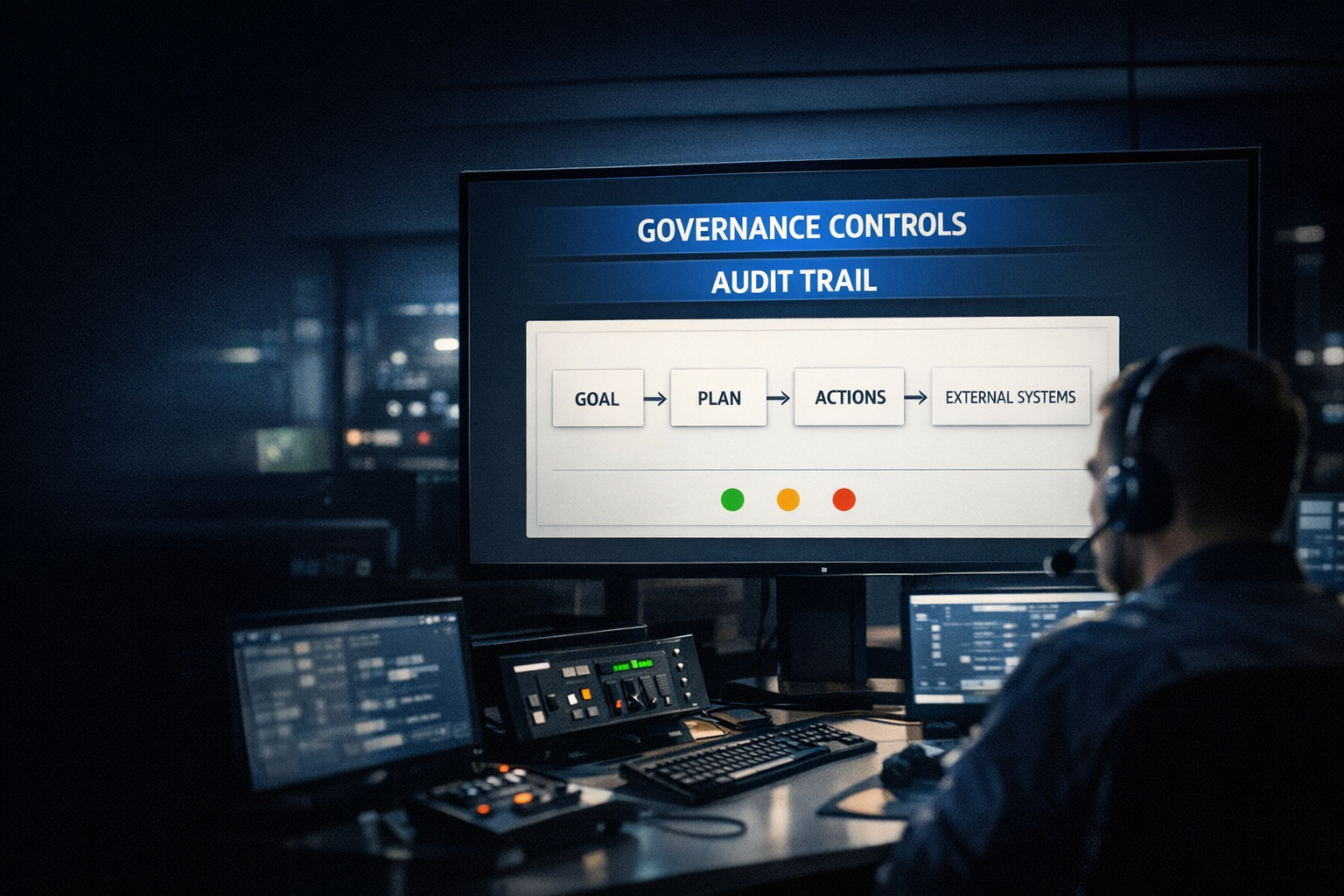
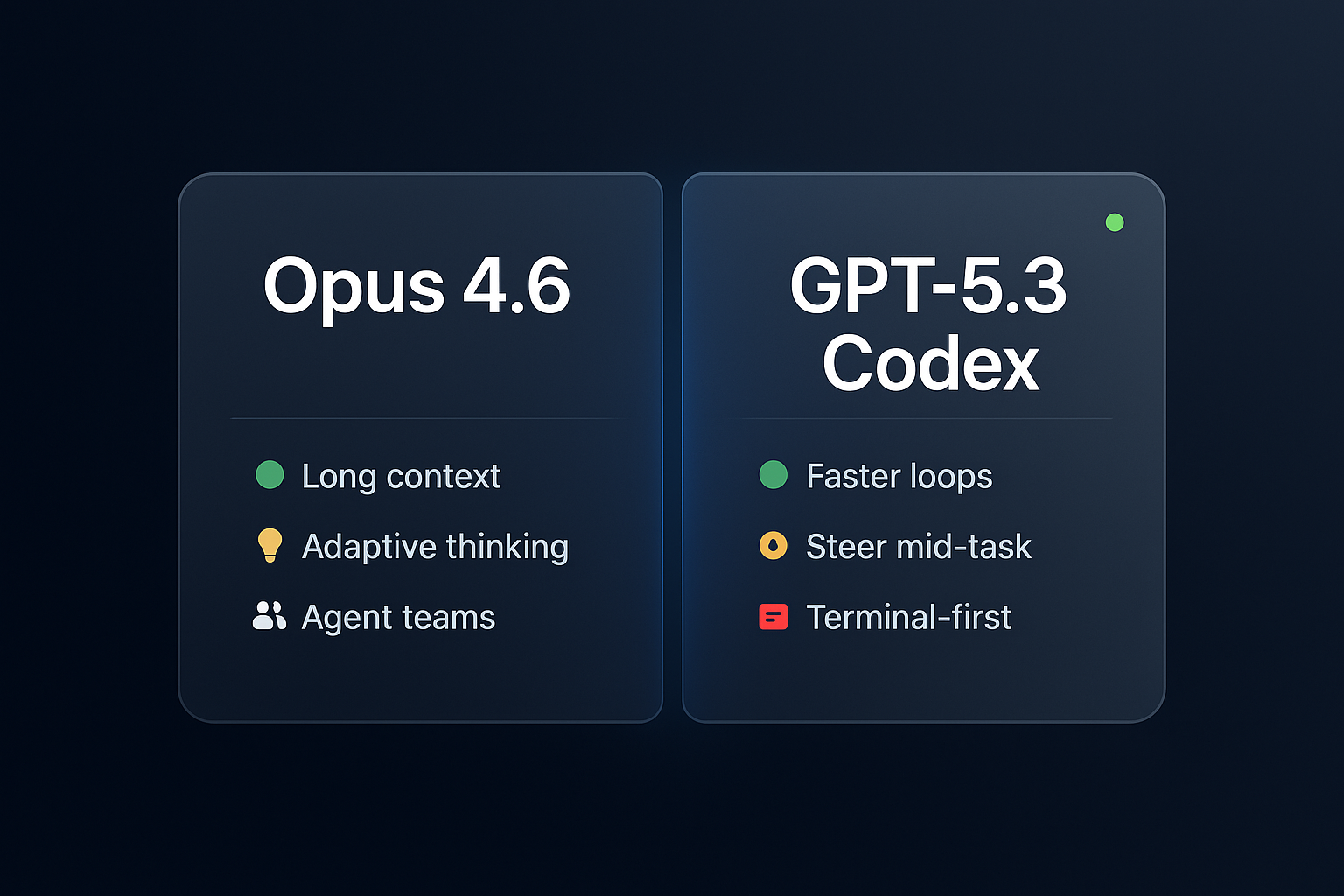
Tools automate tasks. Workers own outcomes.
If you want to build this the hard but sane way, book a Poly Workforce Strategy Call: https://cal.com/princeps/poly-digital-workforce
The self-organizing swarm story breaks on contact with incentives
One of the most persistent fantasies in this category is the self-organizing swarm. You give a bunch of agents a goal, a shared context window, maybe a chat room, maybe a scratchpad, and then supposedly the right organization emerges on its own. Planning appears. Roles emerge. Work gets distributed naturally. Everyone posts spectacular screenshots.
I understand the appeal. It flatters our sense that intelligence will spontaneously compose into management. It also saves the builders from doing the annoying work of org design up front.
The problem is that real production work is not just a coordination puzzle. It is a system of incentives, scarce resources, rights, deadlines, and conflicting priorities. Self-organization looks elegant only when those pressures are abstracted away.
Inside a live business, the workers are not merely trying to solve a puzzle. They are competing, implicitly, for budget, tool access, queue priority, human attention, and execution windows. Some lanes are revenue-critical. Others are maintenance. Some tasks are urgent but low value. Others are strategically important but easy to postpone. A system that claims to self-organize has to resolve all of that somehow.
If you have not explicitly defined how it resolves it, then it will resolve it badly.
This is why swarm-style demos often feel smarter than they are. The evaluation task is usually neat, bounded, and prestige-weighted toward clever planning behavior. The agents can spend time deliberating because no actual customer is waiting, no real KPI is decaying, and no meaningful cost meter is ticking. In that environment, elaborate collaboration can look like intelligence.
Move the same pattern into production and the weaknesses become obvious.
Workers over-deliberate when they should act.
Multiple workers explore the same subproblem because nobody owns it.
Lower-value tasks soak up reasoning time because they are linguistically juicy.
High-impact work stalls because the shared planning surface becomes congested.
Escalations multiply because nobody knows who has final authority.
The workforce starts resembling a committee with unlimited energy and no budget discipline.
That is not what a real operating team needs.
A production system needs explicit incentives and explicit stopping rules. It needs to know which metrics matter most, which worker has priority on which lane, what degree of redundancy is acceptable, and when exploration stops being useful. It needs to know who can decide and who can only recommend. Those are managerial truths whether the workforce is human, synthetic, or mixed.
I am not saying emergent behavior has no place. It can be valuable inside bounded research, simulation, brainstorming, or adversarial testing environments. It can help discover strategies humans might not specify directly. But that is different from claiming that a business should be run by a loose swarm whose structure appears after launch.
Most companies do not need emergence nearly as much as they need legibility.
Legibility is underrated because it looks less magical in a demo. A legible workforce has clearly named roles, visible workflow stages, narrow rights, defined contracts, and measurable expectations. You can inspect it. You can reason about it. You can intervene without breaking the whole thing.
That is a much stronger foundation than hoping the swarm discovers management by itself.
There is also a political angle. In human organizations, vague self-organization often benefits the most assertive actors. In synthetic organizations, vague self-organization benefits the most overactive or over-permissive workers. They consume context, grab tasks, and create the appearance of initiative. Meanwhile more appropriate but narrower workers may get bypassed. Without explicit incentives, the wrong behaviors dominate.
This is another place where selection pressure matters. If the swarm structure is causing duplicated effort, excessive token burn, delayed execution, or poor KPI movement, that is not an aesthetic issue. It is evidence that self-organization is underperforming the business need.
A workforce should be allowed to discover better local tactics. It should not be forced to discover its entire management architecture while live operations are running.
That distinction is one of the clearest separators between AI theater and real operating design.
People love to say they want autonomous teams.
What they usually mean, if they are being honest, is that they want teams that can act independently inside a structure that keeps the business coherent.
That is not the same as a swarm.
It is something better.
It is autonomy with management.
Why the last mile matters more than the brainstorm
Most agent systems look strongest at the top of the funnel of work. They ideate well. They synthesize quickly. They produce lots of plausible options. That creates a flattering impression because the brainstorm is visible and emotionally satisfying. It feels like progress.
The last mile is less glamorous. It is validation, formatting, linking, approvals, compliance, publication, record mutation, follow-through, and post-action verification. It is where many teams quietly bleed value.
This matters because the business does not monetize ideation. It monetizes completed, correct, delivered work.
A content system does not get paid for ten promising outlines. It gets paid, indirectly, when a publishable article goes live, passes quality gates, supports authority, and drives the right readers to the right action.
A sales system does not get paid for draft messages. It gets paid when qualified conversations happen.
A support system does not get paid for elegant analyses. It gets paid when customers get resolved and stay.
A development system does not get paid for good patch ideas. It gets paid when working code ships safely.
The last mile is where the operating model earns its keep because the last mile is where business state actually changes.
This is why so many agent teams feel impressive but underdeliver. They have overinvested in brainstorm quality and underinvested in execution mechanics. They can generate possibilities all day. They cannot reliably land decisions into production systems.
That imbalance shows up in obvious ways.
The writer produces good sections but misses the image, sources, and CTA requirements.
The outreach lane drafts polished messages but lacks verified emails, so nothing is sent.
The reviewer gives nuanced commentary but no clear pass or fail decision.
The engineer proposes fixes but never gets through the merge and deploy path.
The analytics lane produces dashboards with no action path attached.
At first teams blame the last-mile tools. Sometimes the tools are part of it. More often the real problem is that the operating model gave all the prestige to thinking and treated shipping as an afterthought.
That is backward.
In a production organization, the last mile deserves disproportionate design attention because it is the point where value either becomes real or evaporates. You need stronger contracts there, better verification there, sharper rights there, clearer ownership there, and tighter economic measurement there.
This is one reason I like workflows that separate drafting from publishing, recommendation from approval, and analysis from mutation. It lets the system put more rigor where rigor actually matters.
The brainstorm can be more open.
The last mile should be more disciplined.
There is also a strategic point. If your last mile is good, you can afford some looseness upstream because the system has a dependable filter and landing mechanism. If your last mile is weak, then every upstream flourish becomes a liability because there is nowhere reliable for it to resolve.
That is why I think the best agent organizations look slightly conservative where it counts. They may explore broadly in research. They may use natural language flexibly in planning. But when the workflow approaches a business mutation, the rails tighten.
The funny thing is that this makes the overall system feel more ambitious, not less. Why? Because the company can trust it with more consequential work. A system that lands the last mile cleanly earns the right to scale. A system that only brainstorms well earns applause and caution.
One way to test your own setup is simple. Look at the ratio between possible work and landed work.
How many drafts become published assets?
How many leads researched become usable contacts?
How many support suggestions become resolved tickets?
How many engineering ideas become deployed fixes?
How many agent runs end in a verified state change?
If that ratio is poor, your workforce is living too high up the pipeline.
The economic consequences are brutal. Upstream reasoning consumes time and tokens. If the last mile fails, all of that becomes sunk cost with presentation value but little business effect.
That is why production teams should obsess over the last mile. Not because it is exciting, but because it is where output becomes outcome.
The brainstorm gets attention.
The last mile gets paid.
The hidden managerial shift most founders underestimate
Founders often assume the main shift with agent teams is technical. New models, new tools, new integrations, new automations. Those matter. The deeper shift is managerial.
Once you have digital workers in the system, the founder is no longer just choosing software. The founder is designing a labor organization.
That changes the job.
You now have to think about role clarity, performance measurement, incentives, escalation rules, portfolio prioritization, and operational fitness across a mixed human and digital workforce. In other words, you are doing management architecture, whether you admit it or not.
A lot of founders are not prepared for this because software purchasing trained them to think in terms of features and seat counts. Agent workforces demand a different lens. Who owns what? What should be automated first? Where does judgment stay human? Which workers are underperforming? Which lanes deserve more traffic? Which controls are slowing the wrong steps? Which workers need redesign because the business changed?
Those are management questions.
This is part of why some companies stall after promising pilots. The technology was good enough to start, but leadership kept treating it like a tool rollout rather than an organizational redesign. Nobody took responsibility for workforce composition. The system accumulated workers the way companies accumulate SaaS subscriptions: one at a time, for local problems, without a coherent labor model.
Then complexity arrives.
Different teams spin up their own agents.
Naming gets inconsistent.
Metrics differ.
Rights sprawl.
No common escalation discipline exists.
Some workers are overused and some never should have been created.
The founder ends up surrounded by synthetic activity with no clear picture of what is truly working.
The fix is not necessarily a giant centralization effort. It is a managerial posture shift.
Someone, often initially the founder or a strong operator, needs to treat the digital workforce as an organizational asset that requires deliberate design. That means setting standards for worker creation, naming, scope, contracts, evaluation, and retirement. It means asking not just “can we automate this?” but “should this become a durable role in the business?”
It also means getting more honest about where management attention belongs. In the early days of a company, founders often spend too much time doing frontline tasks because the system is small and personal. Agent teams can help move that boundary, but only if the founder redirects attention upward into system design instead of sideways into reviewing every output.
That is the hidden opportunity. Digital labor does not just reduce toil. It can force founders into a more leveraged management layer if they let it.
But there is a trap too. Some founders use agents as a new way to micromanage. They review every draft, tweak every prompt, chase every edge case, and stay deeply entangled in local execution. The workforce then reflects the founder's bottleneck rather than relieving it.
This is where good governance helps the founder as much as the system. Strong contracts, scoped rights, and explicit quality gates let leadership inspect performance at the right altitude. Instead of touching every task, the founder can review lane metrics, incident patterns, cost curves, and strategic exceptions.
That is closer to how a real executive should operate.
The founder also has to get comfortable with selective impersonality. Some workers will not justify their existence. Some lanes will need to be shut down. Some promising experiments will fail. Some roles that felt exciting will turn out to be low leverage. That is normal. It is what management looks like when the workforce includes software.
I suspect this is one of the big divides that will emerge over the next few years. Some founders will remain tool consumers. Others will become workforce architects. The second group will compound faster because they are not just buying capabilities. They are redesigning the company around accountable execution.
This is another reason the operating model matters so much. It gives leadership a way to see, shape, and improve the workforce as a system rather than a chaotic pile of agent experiences.
The technical layer makes digital labor possible.
The managerial layer makes it useful.
That is the shift many people still have not internalized.
For additional context, see the governance case in Poly vs OpenClaw (Clawdbot/Moltbot): Why Production-Grade Agentic Ops Requires Governance and the model selection tradeoffs in Opus 4.6 vs GPT‑5.3 Codex: What Changed (and Why It Matters).
A simple operating model checklist you can use this week
If you want a practical way to pressure-test your current agent setup, run this checklist against one live lane, not your whole company at once.
Can you name the business outcome the lane exists to move?
Can you point to the KPI or operational metric that tells you whether it is working?
Can you name the worker roles in plain language?
Can you state what each worker can read and what each worker can write?
Can you describe the state contract between each handoff?
Can you show the artifact trail for the last five completed runs?
Can you explain where human review sits and why it sits there?
Can you show the retry policy for transient failure versus deterministic failure?
Can you estimate cost per successful outcome, not just cost per run?
Can you identify which worker would lose traffic first if the lane needed to get leaner tomorrow?
If you cannot answer most of those quickly, the problem is usually not model quality. The problem is that you do not yet have a complete operating model.
That is good news because operating models can be improved deliberately. You do not have to wait for some hypothetical future model to rescue a weak organization design. You can tighten scope, narrow rights, improve state contracts, strengthen evidence, and tie the work to real KPIs right now.
That work is less flashy than another demo.
It is also the work that makes the next hundred demos unnecessary.
Additional source links
- Poly186 company website
- Canonical booking link used in Poly CTAs
- GitHub, allowed source domain in portfolio copy guidelines
Supplemental sources
Sources
Sources
- Internal operating signals and KPI context from the live Poly execution environment on 2026-04-20, including browser search outage, blog QA demotions, outbound KPI gaps, and active workflow state.
- The Unit Economics of AI Labor
- Poly Is a Business Operating System (Not Another Tool)
- The Founder Trap: Why Hiring More People Won't Fix Your Agency's Delivery Problem
- Poly vs OpenClaw (Clawdbot/Moltbot): Why Production-Grade Agentic Ops Requires Governance
- Opus 4.6 vs GPT‑5.3 Codex: What Changed (and Why It Matters)
- AI Agents for Small Businesses: From Buzzword to Payroll-Line Item
- Poly186 copy guidelines linked to the active portfolio, including headline, CTA, formatting, and punctuation constraints.
- Canonical booking CTA: https://cal.com/princeps/poly-digital-workforce