
Beyond Zaps: Building a 24/7 Digital Workforce Inside Your Agency

Table Of Content
- TL;DR
- Why Agencies Outgrow Zapier-Style Automations
- What an AI-native Digital Workforce Actually Is
- Designing Digital Workers Around Outcomes, Not Tools
- Implementation Roadmap: Discover → Design → Deploy → Scale
- Risk, Governance, and Team Psychology
- The Next 3–5 Years: From Nice-to-Have to Operating System
- Call to action
- Sources
TL;DR
Zapier, Make, and n8n are fantastic tools—but they’re not a workforce. As your agency scales, point-and-click automations turn into a brittle maze only one person understands. A 24/7 digital workforce replaces that fragility with specialised AI workers that own outcomes (onboarding, reporting, CRM hygiene) end-to-end, across tools, with SLAs and escalation paths just like real team members.
Beyond Zaps: Building a 24/7 Digital Workforce Inside Your Agency
By Princeps Polycap

A few years ago I had one of those nights every agency founder knows too well.
It was 1:30 a.m. A flagship client had a launch going live, the team was spread across three time zones, and my phone lit up: “Why are our leads disappearing?”
Within minutes Slack filled with screenshots of broken reports, missing rows in Airtable, and half-synced deals in HubSpot. The culprit wasn’t a human. It was a chain of brittle automations—Zapier flows daisy-chained into Make scenarios and custom scripts—that decided tonight was the night to fail silently.
The painful part wasn’t just the failure. It was the realization that no one owned the outcome. We had owners for channels, for clients, even for spreadsheets. We did not have anyone—or anything—owning the end-to-end flow from “lead captured” to “client sees accurate report”.
We had tasks firing. We didn’t have workers.
That was the night I stopped thinking in terms of “more zaps” and started thinking in terms of a digital workforce.
See also: From Brittle Zaps to a 24/7 Digital Workforce, From Brittle Automations to a 24/7 Digital Workforce, and AI Digital Workers Should Own Outcomes, Not Tasks.
Why Agencies Outgrow Zapier-Style Automations
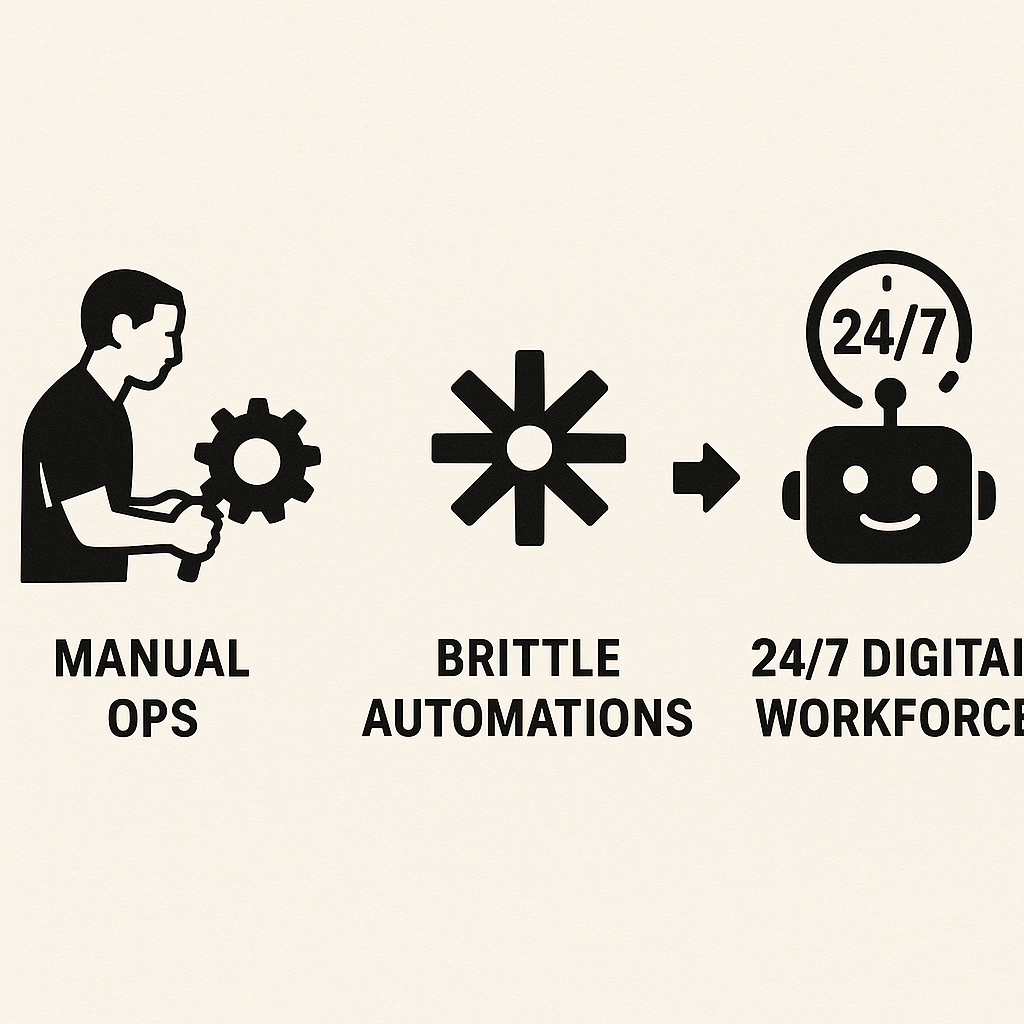
At low scale, tools like Zapier, Make, and n8n feel magical:
- connect typeforms to CRMs,
- CRMs to Slack,
- Slack to billing.
You shave hours off weekly reporting and avoid your first ops hire.
As you grow, the pattern changes:
- Clients diversify, edge cases multiply.
- Each “quick win” automation becomes invisible infrastructure.
- A single API change or field rename can silently break a revenue-critical flow.
There’s also a mismatch in abstraction:
- Your clients care about: “Did the campaign launch on time?”, “Are leads followed up within 15 minutes?”, “Is my report accurate and on my desk Monday morning?”
- Your zaps care about: “When this row is created, send this webhook.”
That gap between business outcomes and low-level triggers/actions is currently filled with human glue—operations managers, coordinators, founders.
You can keep patching it—or you can redesign it.
What an AI-native Digital Workforce Actually Is
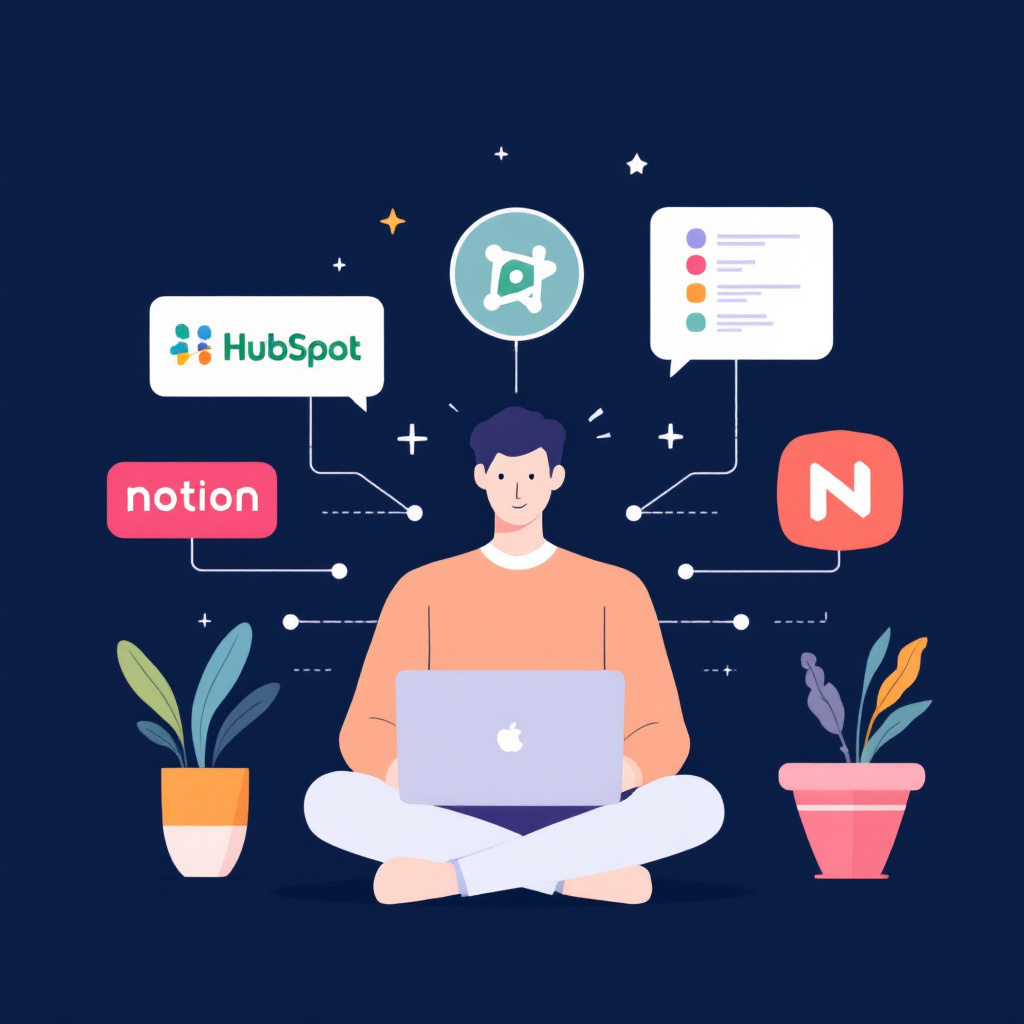
“Digital workforce” can mean anything from RPA scripts to chatbots. Here’s what it means in Poly:
A Poly Worker is closer to hiring a junior operator whose job description is: “Own this workflow end-to-end, 24/7, across tools.”
Examples:
- Client Reporting Worker – pulls performance data, cleans it, populates Notion or Looker dashboards, and posts summaries by a defined SLA.
- Onboarding Worker – watches for new “Closed Won” deals, creates projects/tasks/channels, sends welcome emails, and chases missing inputs.
- QA & Compliance Worker – monitors campaigns/workflows for anomalies, flags issues, opens tickets when SLAs are at risk.
Under the hood, these workers are agentic AI systems: they can plan, call tools, react to new information, and escalate.
Where a zap is “when X then Y,” a worker is:
“Ensure every client has a fresh, accurate KPI report by 9 a.m. Monday in their local time, with anomalies flagged and a narrative drafted.”
That’s the unit of design that actually maps to your business.
See also: AI Agents, Digital Workers, and the End of Brittle Ops for how we think about agents vs workers, and AI Digital Workers Should Own Outcomes, Not Tasks for the KPI lens.
Designing Digital Workers Around Outcomes, Not Tools
The temptation—especially if you’re technical—is to start from tools: “We use HubSpot, Notion, Slack, Airtable—let’s wire them all up with AI in the middle.”
The better starting point is outcomes and SLAs:
- Responsiveness – “No high-intent lead waits more than X minutes.”
- Visibility – “Leaders can see, at a glance, what’s on track and what’s at risk.”
- Consistency – “Every client gets the same quality of onboarding, reporting, and communication.”
We define workers just like roles in an org chart.
A typical Client Reporting Worker spec:
- Mandate: ensure every managed client receives an accurate, human-readable performance report by 9 a.m. Monday.
- Inputs: ad platforms, CRM, spend + revenue data, client targets.
- Outputs: updated dashboard + Slack/email summary.
- SLA: 99% on-time completion; exceptions flagged with root-cause notes.
- Escalation: if an API is down, mark report as “delayed” and notify; if data anomalies >X%, tag the account owner.
Designing at this level gives you:
- a story your team understands,
- tools you can swap under the hood, and
- metrics you can trace back to specific workers.
Implementation Roadmap: Discover → Design → Deploy → Scale
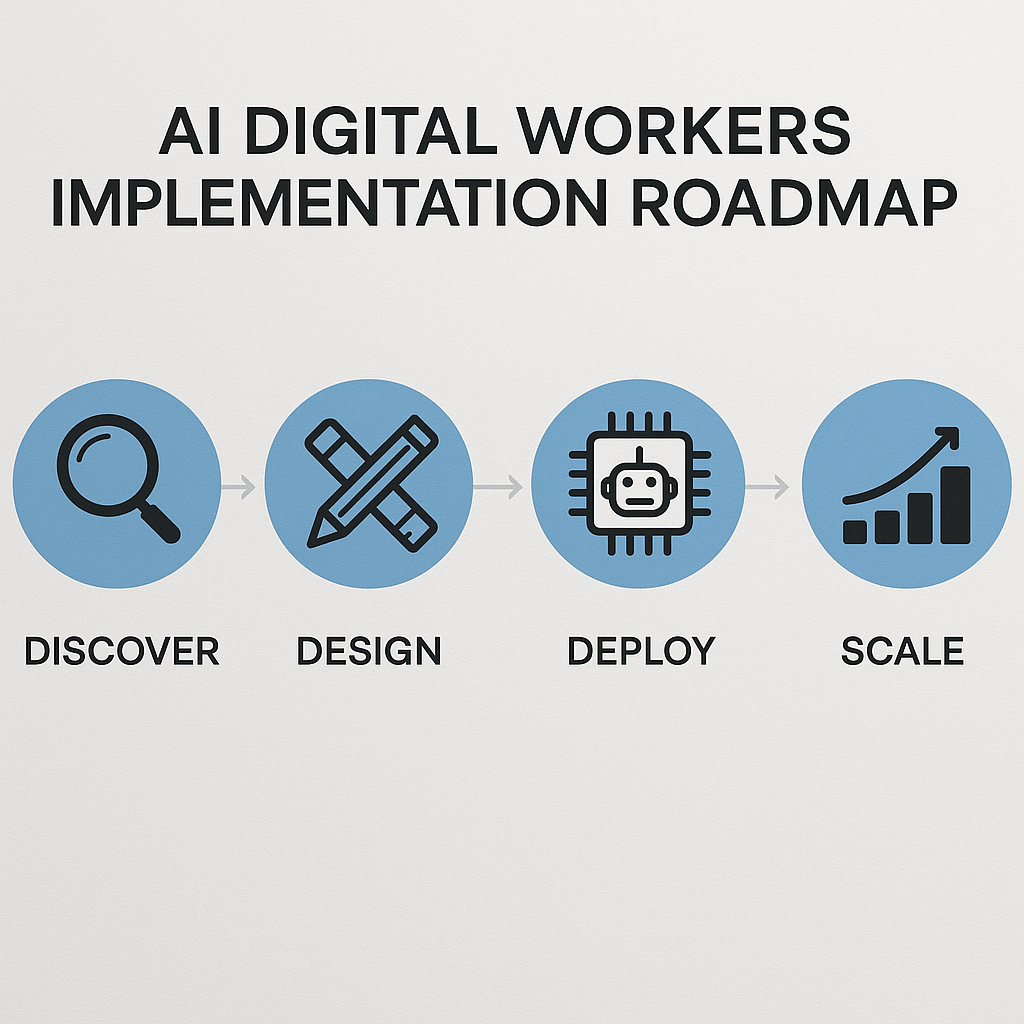
To keep this grounded, here’s the four-phase model we use in Poly:
- Discover – find the 30–50% workload reduction pockets.
- Design – turn workflows into worker mandates.
- Deploy – put 3–5 workers into production with guardrails.
- Scale – treat workers as an operating layer, not a science project.
This mirrors the rollout patterns in From Brittle Automations to a 24/7 Digital Workforce.
Risk, Governance, and Team Psychology
Whenever I talk about “digital workers” owning outcomes, founders ask:
- “Will this freak my team out?”
- “What happens when the agent is wrong?”
- “How do we avoid shadow systems we don’t understand?”
The short answers:
- Don’t surprise people; introduce workers as colleagues, not stealth scripts.
- Give workers constraints and kill switches, just like you do for humans with prod access.
- Make their actions observable and explainable.
Good governance for digital workers looks a lot like good governance for human teams:
- Access control – workers only see what they need.
- Audit trails – every action is logged with who/what/why.
- Kill switches – clear ways to pause or roll back a worker if it misbehaves.
And the psychology? People don’t hate automation. They hate surprise automation.
The more you frame digital workers as “the thing that takes the junk work off your plate so you can think,” the faster the posture shifts from fear to “please give me more of that.”
The Next 3–5 Years: From Nice-to-Have to Operating System
Zooming out:
- Clients will increasingly expect AI-native responsiveness, reporting, and personalization.
- Competitors will quietly install digital workers and enjoy better margins and calmer teams.
- The gap between “we have some automations” and “we have a digital workforce” will widen.
When I look back at that 1:30 a.m. night of broken zaps and angry messages, I don’t blame Zapier or Make. They’re excellent for what they’re designed to do.
The mistake was asking them to be a workforce, not a toolkit.
Poly exists because I believe the next chapter for agencies and SaaS belongs to operators who:
- treat workflows as products,
- treat AI agents as teammates—with mandates, SLAs, and accountability,
- treat digital labor as a first-class input alongside capital and people.
If your revenue is growing but your operations feel like duct tape and luck, this is the best time to make the shift.
Call to action
Want to deploy a governed digital workforce instead of another brittle automation stack?
- Learn more: https://agencyofpoly.com/
Sources
- Internal Poly digital workforce engagements with agencies and SaaS teams.
- Industry commentary on automation sprawl and operational fragility.