
Stop Automating Tasks. Start Hiring Workers.
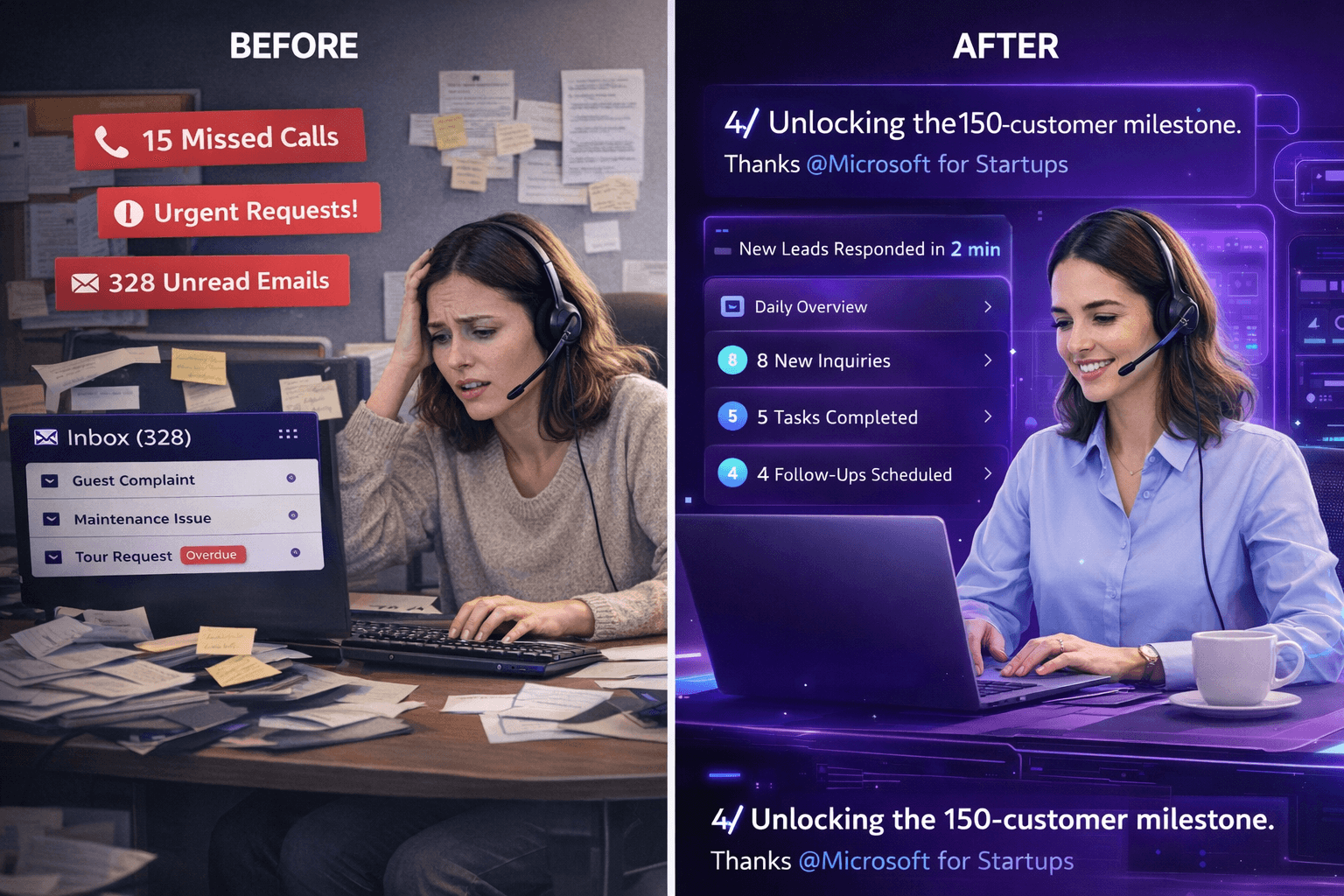
Stop Automating Tasks. Start Hiring Workers.
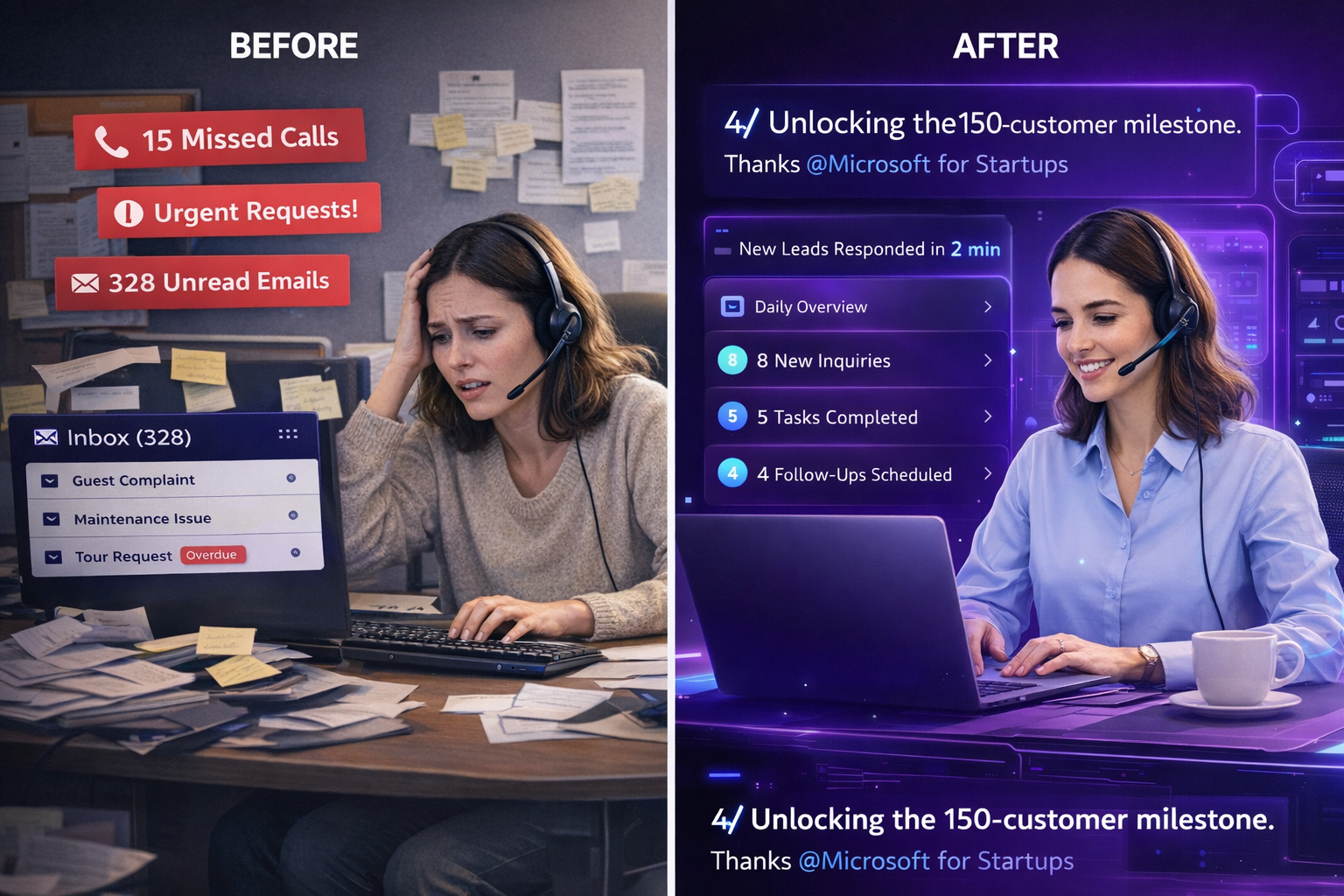
TL;DR
- Task automation moves data between systems but breaks when edge cases appear.
- Digital workers own entire outcomes, handle complexity, and self-heal.
- Digital workers act autonomously but keep a full audit trail.
- Moving from task automation to worker deployment is an organizational shift, not just a technical one.
Contents
- The difference between a task and an outcome
- Why RPA was a false start
- What a digital worker actually does
- The unit economics argument
- The ownership model changes everything
- What to do next
Your automation stack is probably held together with duct tape.
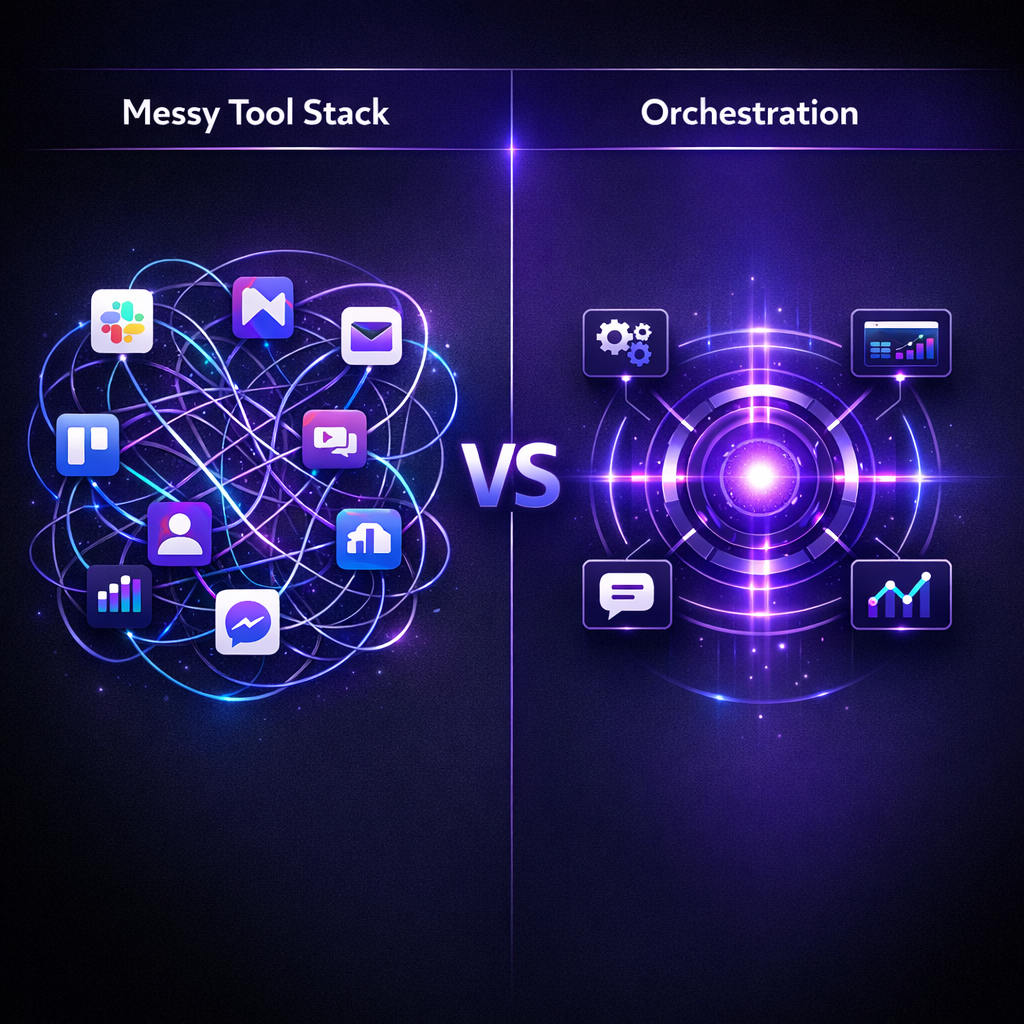
Not literally. But if you're running a modern agency or SaaS operation, you've got a tangle of Zapier workflows, Make scenarios, and custom scripts that break the moment someone changes a field name. You know the feeling. Something stops working on a Tuesday afternoon and nobody notices until a client calls on Thursday.
This is the fundamental problem with task automation: it automates steps, not outcomes. And steps break constantly.
The difference between a task and an outcome
A task is "move this data from Typeform to HubSpot." An outcome is "every new lead gets qualified, routed, and booked within 5 minutes, with an audit trail."
Traditional automation handles the task. It moves the data. But it doesn't know what to do when the form field changes, when HubSpot's API rate-limits, or when the lead needs a human review before booking. It just fails silently.
A digital worker handles the outcome. It owns the entire sequence. When something breaks, it retries, escalates, or routes around the failure. It logs what happened. It reports back.
This isn't a theoretical distinction. It's the difference between spending 4 hours a week fixing broken Zaps and spending zero.
Why RPA was a false start
Robotic Process Automation promised exactly this kind of relief. The pitch was compelling: record what a human does, replay it forever.
The reality was different. RPA bots are brittle. They break when a UI changes. They can't handle exceptions. They need constant maintenance. And the vendors charge per bot, which means your costs scale linearly with complexity.
Gartner reported global RPA software revenue reached roughly $2.9 billion in 2022, with growth decelerating as buyers recognized maintenance overhead and the rise of AI-driven alternatives [1][2]. The technology solved the wrong problem. It replicated human clicks instead of understanding human intent.
What a digital worker actually does
A digital worker is an autonomous agent that owns a defined scope of work. Think of it like hiring a specialist contractor, not installing a script.
Here's what that looks like in practice:
- Trigger awareness. The worker monitors its inputs continuously. Not on a cron schedule. Continuously.
- Decision logic. When something arrives, the worker decides what to do based on rules, context, and prior outcomes. Not just if/then branching.
- Execution. The worker takes action across multiple systems. API calls, data transforms, content generation, outreach. Whatever the outcome requires.
- Self-healing. When something fails, the worker retries with different parameters, falls back to alternative paths, or escalates to a human with full context.
- Audit trail. Every decision, every action, every escalation is logged. You can trace any outcome back to its root cause.
This is what we build at Poly. Not automation scripts. Outcome-owning workers.
The unit economics argument
Here's the math that matters.
A junior operations person costs $55,000-$70,000 per year loaded (salary, benefits, management overhead, tools). They handle roughly 40 hours of work per week, minus meetings, context switching, and the 2 weeks they're out sick or on vacation.
A digital worker runs 24/7. No PTO. No context switching. No Monday morning ramp-up. The cost is compute and orchestration infrastructure, which scales sub-linearly with volume.
For repeatable, rule-based work with clear success criteria, the digital worker wins on cost, speed, and consistency. Not because humans are bad at these tasks, but because humans are wasted on them.

The ownership model changes everything
The real shift isn't technological. It's organizational.
When you automate tasks, someone still owns the outcome. Usually a human manager who monitors dashboards, fixes failures, and coordinates across tools. The automation just made individual steps faster.
When you deploy workers, the worker owns the outcome. The human moves up to governance: defining what success looks like, setting escalation thresholds, reviewing edge cases. Strategic work instead of maintenance work.
This is how you scale an agency from $1M to $5M without tripling headcount. Not by automating more tasks. By assigning outcome ownership to digital workers and freeing your team for the work that actually requires human judgment.
What to do next
If your current stack requires a human to monitor whether it's actually working, you have a task automation problem, not a workforce problem.
The fix isn't more Zaps. It's fewer Zaps and more workers.
Start with your highest-volume, most failure-prone workflow. Map the outcome, not the steps. Define what success looks like. Then deploy a worker that owns it.
Book a Poly Workforce Strategy Call and we'll map your first digital worker deployment in 30 minutes.
Sources
- Gartner, "Gartner Says Worldwide Robotic Process Automation Software Revenue to Reach $2.9 Billion in 2022." https://www.gartner.com/en/newsroom/press-releases/2022-08-01-rpa-forecast-2022
- Gartner, "Forecast Analysis: Robotic Process Automation, Worldwide" (research note summary via Gartner newsroom). https://www.gartner.com/en/newsroom
- Forrester, "The State Of RPA: Maintenance Is The New Frontier." https://www.forrester.com/blogs/category/robotic-process-automation-rpa/
- Deloitte, "Automation with Intelligence: Reimagining the Organisation in the Age of AI." https://www2.deloitte.com/us/en/insights/focus/technology-and-the-future-of-work/intelligent-automation-survey.html