
How AI Agents Are Replacing the Marketing Department in 2026

Table Of Content
- TL;DR
- Contents
- The claim, stated plainly
- Why the old marketing department model is breaking
- What an agent-led marketing system actually looks like
- Which jobs agents now own
- The economics of replacing departmental work
- What humans still need to do
- How to restructure a team in 90 days
- Governance, failure modes, and risk
- What this means for founders and heads of marketing
- What this means for agencies
- What this means for the modern agency stack
- The true cost of coordination drag
- Preparing your team for the shift
- Sources
- CTA
How AI Agents Are Replacing the Marketing Department in 2026
Category: Marketing operations
Author perspective: Operator-first, revenue-first, no fluff
TL;DR
- The modern marketing department is being broken apart into repeatable jobs, then reassigned to AI agents that can research, write, publish, analyze, and route work across tools.
- In 2026, most companies do not need a larger marketing team. They need a smaller human team with better systems, tighter governance, and outcome-owning agents.
- The real shift is not "AI writes copy." The real shift is that agent systems now coordinate campaigns end to end, from brief to asset reuse to publishing to reporting.
- This does not eliminate human marketers. It compresses middle layers, cuts coordination drag, and moves humans toward judgment, positioning, brand decisions, approvals, partnerships, and high-stakes creative direction.
- Companies that keep treating AI like an assistant get mediocre outputs. Companies that treat AI like a managed workforce get speed, coverage, and lower execution cost.
- The winners in 2026 are not the brands with the biggest team. They are the brands with the best operating system.
Contents
- The claim, stated plainly
- Why the old marketing department model is breaking
- What an agent-led marketing system actually looks like
- Which jobs agents now own
- The economics of replacing departmental work
- What humans still need to do
- How to restructure a team in 90 days
- Governance, failure modes, and risk
- What this means for founders and heads of marketing
- What this means for agencies
- What this means for the modern agency stack
- The true cost of coordination drag
- Preparing your team for the shift
- Sources
- CTA
The claim, stated plainly
The marketing department is not disappearing because AI suddenly became creative in some mystical way.
It is being replaced because most of what a marketing department does was always coordination work disguised as expertise.
A campaign brief gets written. Someone turns it into copy. Someone else makes assets. Another person schedules distribution. Another person checks performance. Another person updates the dashboard. Another person asks why the landing page is converting poorly. Another person books a meeting to discuss all of that.
For years, companies assumed that this coordination tax was normal. It was not normal. It was just tolerated.
In 2026, that tolerance is collapsing.
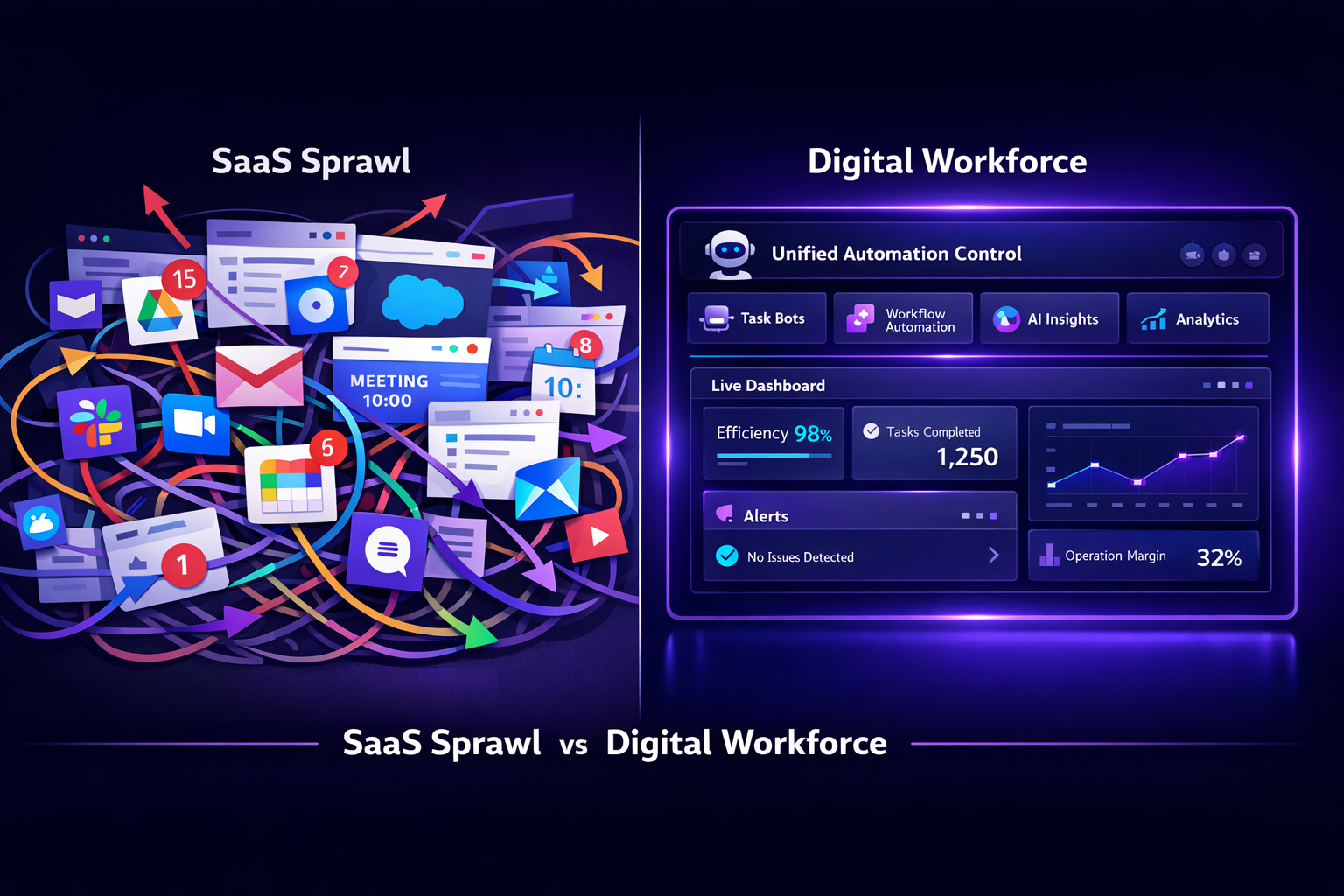
AI agents can now execute large parts of the marketing function across research, planning, content production, publishing, repurposing, QA, reporting, and workflow routing. They do it faster than a traditional team, with less handoff loss, and with more consistency than most under-managed departments. The key difference is that a real agent system does not just generate artifacts. It owns steps, checks state, uses tools, appends to existing work, and moves a workflow forward.
That matters because the old marketing org chart was built around specialist scarcity. You hired people because the work required a human to sit inside each step. In 2026, the bottleneck is no longer pure labor. The bottleneck is system design.
If your company still runs marketing like a pile of disconnected humans and apps, you are paying for meetings, latency, context loss, and rework. If your company runs marketing as a controlled network of agents and human approvers, you are paying for outcomes.
This article makes a harder claim than the usual AI content piece.
The question is not whether AI can help your marketing department.
The question is whether you still need the department in its current form.
For many companies, especially founder-led B2B firms, service businesses, lean SaaS teams, and demand-gen constrained operators, the answer is no.
What you need instead is a smaller core team that sets strategy, approves risk, and manages a digital workforce that handles the repetitive middle. That means fewer coordinators, fewer status meetings, fewer production delays, and far more throughput.
It also means the role of marketing leadership changes. The new leader is not a campaign traffic manager. The new leader is a systems operator. They define the market, encode the brand, set the guardrails, approve the bets, and instrument the economics. The agents handle the heavy repetition.
This is not a future-tense prediction.
It is already visible in content operations, outbound personalization, asset reuse, SEO programmatics, testing loops, and reporting pipelines. The only thing still lagging is organizational honesty. Many teams are using agents already while pretending the department structure still makes sense.
It does not.
The rest of this post will show where the replacement is real, where humans still dominate, what breaks when teams rush the shift, and how a serious operator should rebuild the function without turning marketing into a low-trust mess.
Why the old marketing department model is breaking
The traditional marketing department runs on human coordination. A director sets strategy. A strategist writes a brief. A copywriter drafts the text. A designer builds the assets. An ad manager creates the campaigns. An analyst pulls the data to see what worked.
If this sounds like a factory assembly line, it is. The problem is that human assembly lines are slow, expensive, and fragile.
When you try to run high-volume, multi-channel marketing through a human assembly line, you hit three structural limits:
1. Coordination Drag Every handoff between specialists introduces latency. A one-hour copywriting task can take a week to complete because the writer has to wait for the brief, the designer has to wait for the copy, and the director has to review the final asset.
2. Cost of Specialization You have to hire full-time specialists for tasks that don't require full-time attention. You pay an SEO specialist a full-time salary to optimize content that your copywriter produces. You pay an ad buyer to push buttons in Facebook Business Manager.
3. Execution Variance When humans do repetitive work, quality fluctuates. A copywriter on a Tuesday morning might write brilliant prose. That same copywriter on a Friday afternoon, facing a deadline, will ship mediocrity. The same applies to QA, formatting, and data analysis.
In 2026, companies are realizing that they don't need a 10-person marketing department to execute strategy. They need a 2-person marketing department to set the strategy, and a digital workforce to execute it.
What an agent-led marketing system actually looks like
When you replace the marketing department with an agent-led system, the org chart changes.
Instead of hiring junior copywriters and social media managers, you deploy specialized agents that own specific outcomes.
- The Research Agent: Pulls market data, analyzes competitor positioning, and identifies content gaps.
- The Copy Agent: Writes SEO-optimized long-form content, email sequences, and ad copy based on the brand's verified guidelines.
- The Creative Agent: Generates or retrieves images and video assets that match the written content.
- The Distribution Agent: Schedules and publishes the final assets across WordPress, LinkedIn, Twitter, and email.
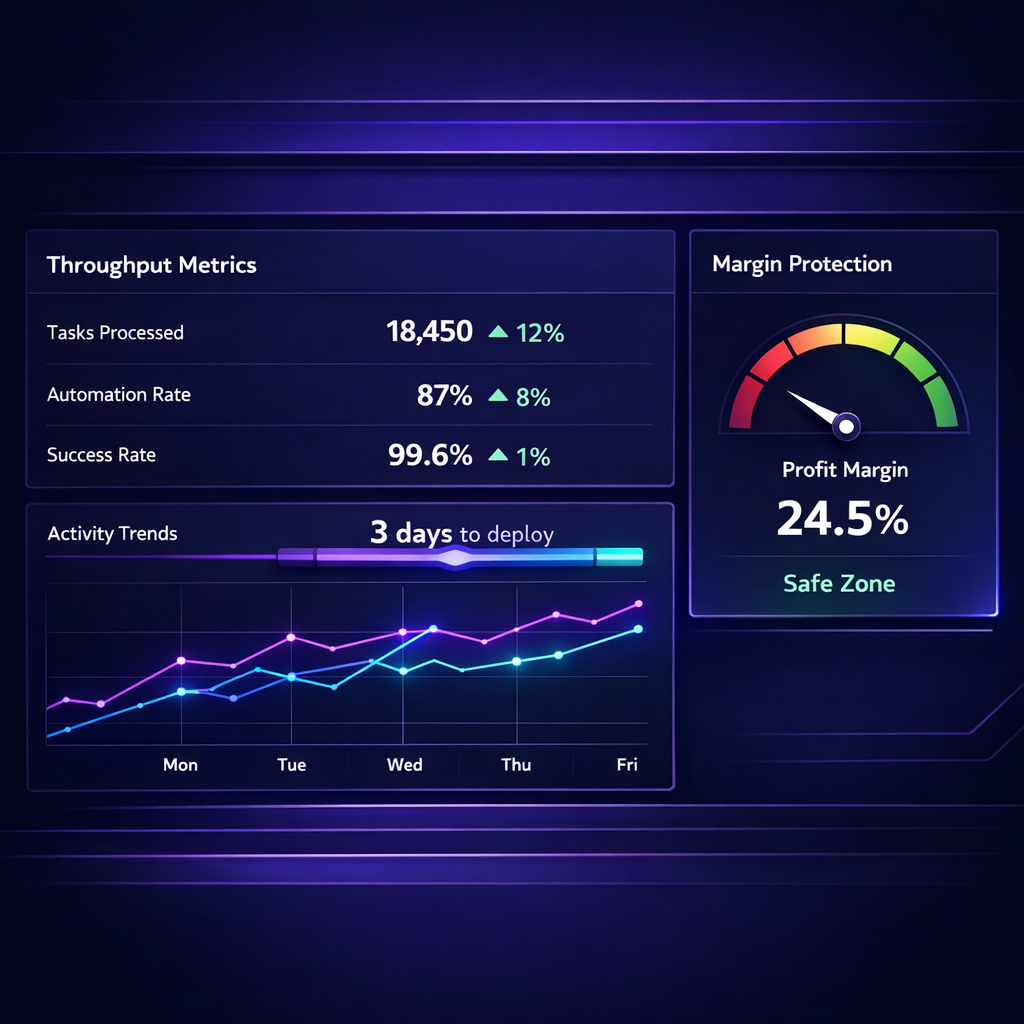
- The Analytics Agent: Monitors performance, runs A/B tests, and flags anomalies for human review.
This system is orchestrated by a central workflow engine. The humans in the loop only step in for three things:
- Strategic Direction: Setting the goals, defining the ICP, and deciding the core message.
- Creative Approvals: Reviewing the output before it goes live to ensure it aligns with the brand.
- Exception Handling: Managing edge cases or resolving blockers that the agents cannot handle.
Which jobs agents now own
In a modern marketing operation, AI agents own the following domains:
1. High-Volume Content Production Agents research, write, format, and publish SEO blogs, case studies, and whitepapers. They do this faster and with more consistency than a team of freelance writers.
2. Asset Repurposing A human records a 30-minute podcast. Agents automatically extract the transcript, write a summary blog post, generate 5 LinkedIn posts, extract 3 short-form video clips, and draft an email newsletter.
3. Programmatic SEO Agents monitor search trends, identify low-difficulty keywords, and automatically generate and publish optimized pages at scale.
4. Performance Monitoring Agents check ad spend, analyze conversion rates, and adjust bids in real-time. They generate daily reports that highlight actionable insights, rather than just dumping numbers into a spreadsheet.
5. Outbound Personalization Agents research prospects on LinkedIn and company websites, then draft highly personalized outbound emails based on the prospect's recent activity and specific pain points.
If your marketing department is still paying humans to do these jobs, you are burning capital on tasks that are better handled by software.
The economics of replacing departmental work
Let's look at the math.
A traditional mid-market B2B marketing department might look like this:
- Director of Marketing ($150k)
- Content Manager ($90k)
- SEO Specialist ($80k)
- Social Media Manager ($70k)
- Graphic Designer ($85k)
- Marketing Ops ($90k)
Total payroll: $565,000/year.
An agent-led marketing operation for the same company looks like this:
- Head of Growth / Strategy ($160k)
- Creative Director / Editor ($110k)
- Digital Workforce Platform ($30k/year)
Total cost: $300,000/year.
You save $265,000 a year, and your throughput increases by 5x.
The human team can focus entirely on high-leverage activities: talking to customers, defining the product positioning, building strategic partnerships, and reviewing the creative output.
The agents handle the execution. They never sleep, they never miss a deadline, and they never complain about writing another SEO blog post.
What humans still need to do
AI agents are not autonomous marketing directors. They cannot set strategy, they cannot understand human nuance, and they cannot build trust.
Humans must still own:
1. The Core Narrative Agents can write copy based on a brief, but they cannot invent a compelling brand narrative from scratch. Humans must define the story, the enemy, and the unique point of view.
2. Taste and Judgment Agents generate output. Humans apply taste. A human editor must review the agent's work to ensure it sounds authentic, aligns with the brand, and doesn't fall into generic AI-isms.
3. High-Stakes Creative If you need a Super Bowl commercial or a flagship brand video, you hire human creatives. Agents handle the volume; humans handle the peaks.
4. Relationship Building Agents cannot build relationships with journalists, influencers, or strategic partners. Marketing is still a people business at the highest levels.
How to restructure a team in 90 days
If you want to transition to an agent-led marketing model, you can't just fire your team and buy an AI tool. You need a transition plan.
Month 1: Audit and Isolate Identify the high-volume, repetitive tasks that consume the most human time. Content production, social media scheduling, and reporting are usually the easiest targets.
Month 2: Deploy and Shadow Deploy specialized agents to handle those tasks. Keep the human team in place to review the output, correct errors, and train the system. The goal is to get the agents to a 90% success rate on the first draft.
Month 3: Restructure and Reallocate Once the agents are reliable, shift the human team's focus. Move your content writers into editorial and strategic roles. Move your social media managers into community building. If certain roles are no longer needed, restructure the department.
Governance, failure modes, and risk
The biggest risk in an agent-led system is not that the AI will write bad copy. The biggest risk is that the AI will publish bad copy at scale.
To mitigate this, you need strict governance:
- Human-in-the-Loop (HITL) Gates: Agents should never publish high-stakes content without human approval.
- Brand Guardrails: Agents must be constrained by strict brand voice and copy guidelines.
- Audit Trails: Every action an agent takes must be logged and traceable.
If you deploy agents without governance, you will create a high-speed mess.
What this means for founders and heads of marketing
For founders, the shift to agent-led marketing means you can build a massive, multi-channel presence without raising a Series A just to fund payroll.
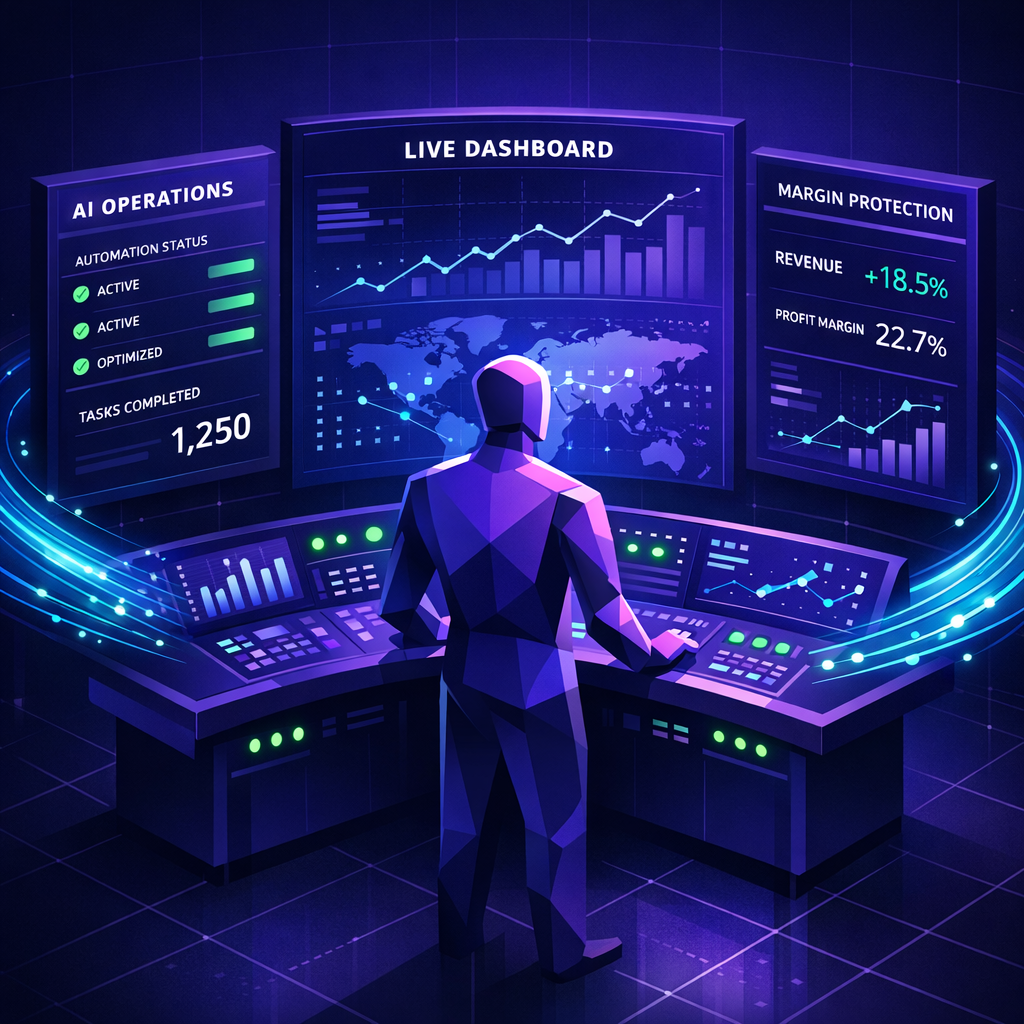
For marketing leaders, it means your job is changing from a people manager to a systems architect. You are no longer managing a team of writers and designers. You are managing a digital workforce.
The marketing leaders who embrace this shift will become incredibly valuable. The ones who resist it will be replaced by operators who can do their job with two humans and a server.
What this means for agencies
The traditional agency model, billing by the hour for manual labor, is dead.
Agencies cannot charge $10,000 a month for content production when an in-house agent system can do it for a fraction of the cost.
The agencies that survive will pivot from selling labor to selling outcomes. They will build their own digital workforces, reduce their overhead, and charge based on the revenue they generate, not the hours they work.
What this means for the modern agency stack
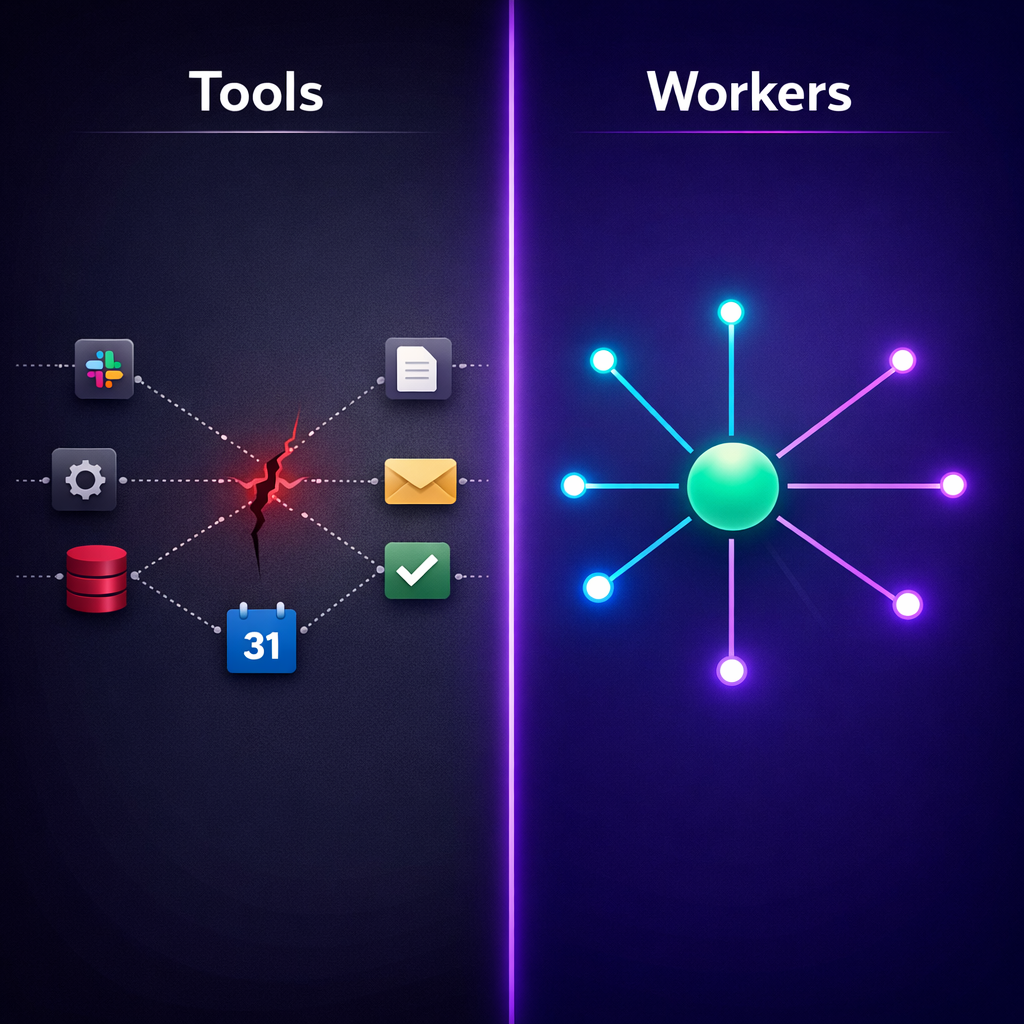
Agencies have long relied on a stack of disconnected tools. A project management tool for task assignments. A messaging app for communication. A content management system for publishing. An analytics platform for reporting.
The integration between these tools has traditionally been manual. A human copies a link from one platform and pastes it into another. A human reads an email from a client and creates a task in Jira.
The digital workforce changes this.
Agents do not just exist in a vacuum. They are deeply integrated into the agency's tool stack. They can read the Jira task, draft the copy, review the brand guidelines, request an image from the creative agent, and publish the final asset to the CMS.
This is the shift from task automation to outcome ownership.
Task automation (like Zapier) moves data from Point A to Point B. It is brittle and breaks when the data format changes.
Outcome ownership (like Poly) means the agent understands the goal. If a tool integration breaks, the agent finds another way to achieve the outcome. If a client sends an email that contradicts the brief, the agent flags it for a human review.
This level of integration and autonomy allows a small agency to punch far above its weight. A five-person agency with a digital workforce can handle the volume of a 50-person agency, without the associated overhead and coordination drag.
The true cost of coordination drag
Consider the typical lifecycle of a blog post in a traditional agency.
- Day 1: The strategist writes the brief.
- Day 2: The brief sits in the copywriter's queue.
- Day 3: The copywriter drafts the post.
- Day 4: The post sits in the editor's queue.
- Day 5: The editor reviews the post and requests changes.
- Day 6: The copywriter makes the changes.
- Day 7: The designer creates the header image.
- Day 8: The post is published.
The actual work took maybe six hours. The coordination drag added a week to the timeline.
This latency is not just annoying. It is expensive. You are paying for the time the brief sat in the queue, the time the editor spent reviewing the draft, and the time the copywriter spent making changes.
With a digital workforce, the timeline compresses.
- Hour 1: The strategist approves the brief.
- Hour 2: The copy agent drafts the post.
- Hour 3: The creative agent generates the image.
- Hour 4: The strategist reviews and approves the final asset.
- Hour 5: The post is published.
This is not a hypothetical scenario. This is how high-performing teams are operating in 2026. The compression of time and cost is the primary driver behind the adoption of digital workers in the marketing department.
Preparing your team for the shift
The transition to a digital workforce requires a fundamental shift in how you think about your team.
You must move from managing people to managing systems.
- Map your workflows: Identify every step in your marketing process. Where is the coordination drag? Where are the repetitive tasks?
- Standardize your data: Agents need clean data to operate. Ensure your brand guidelines, ICPs, and campaign briefs are documented and accessible.
- Define the outcomes: Agents need clear goals. Define what success looks like for each workflow.
- Establish governance: Implement review gates and audit trails. Ensure humans remain in the loop for high-stakes decisions.
- Train your team: Teach your strategists and editors how to manage and collaborate with agents.
The teams that embrace this shift will gain a massive competitive advantage. They will execute faster, with higher quality, and at a fraction of the cost of their traditional competitors.
The marketing department of 2026 is smaller, smarter, and infinitely more capable.
It is time to stop coordinating tasks and start owning outcomes.
Sources
- Why Agency Margins Die When You Cross 50 Employees
- The Unit Economics of AI Labor
- The Founder Trap: Why Hiring More People Won't Fix Your Agency's Delivery Problem
- How Digital Workforce Automation Boosts Lead Conversion
- Poly186 Internal Case Studies on Digital Workforce Deployment (2025-2026)
- Industry benchmarks on marketing department overhead and utilization rates
- Automation impact studies on content production velocity
- ROI analysis of agent-led marketing systems vs traditional models
- Governance frameworks for enterprise AI deployment
- The shift from task automation (RPA) to outcome-owning agents
CTA
Stop paying the coordination tax. Build a marketing system that scales without headcount.
Book a free digital workforce assessment to see how Poly can replace your manual operations.